 Welkom in Europa
HONFLEUR
BEZIENSWAARDIGHEDEN / HIGHLIGHTS
Bezienswaardigheden / tips Honfleur 2026:
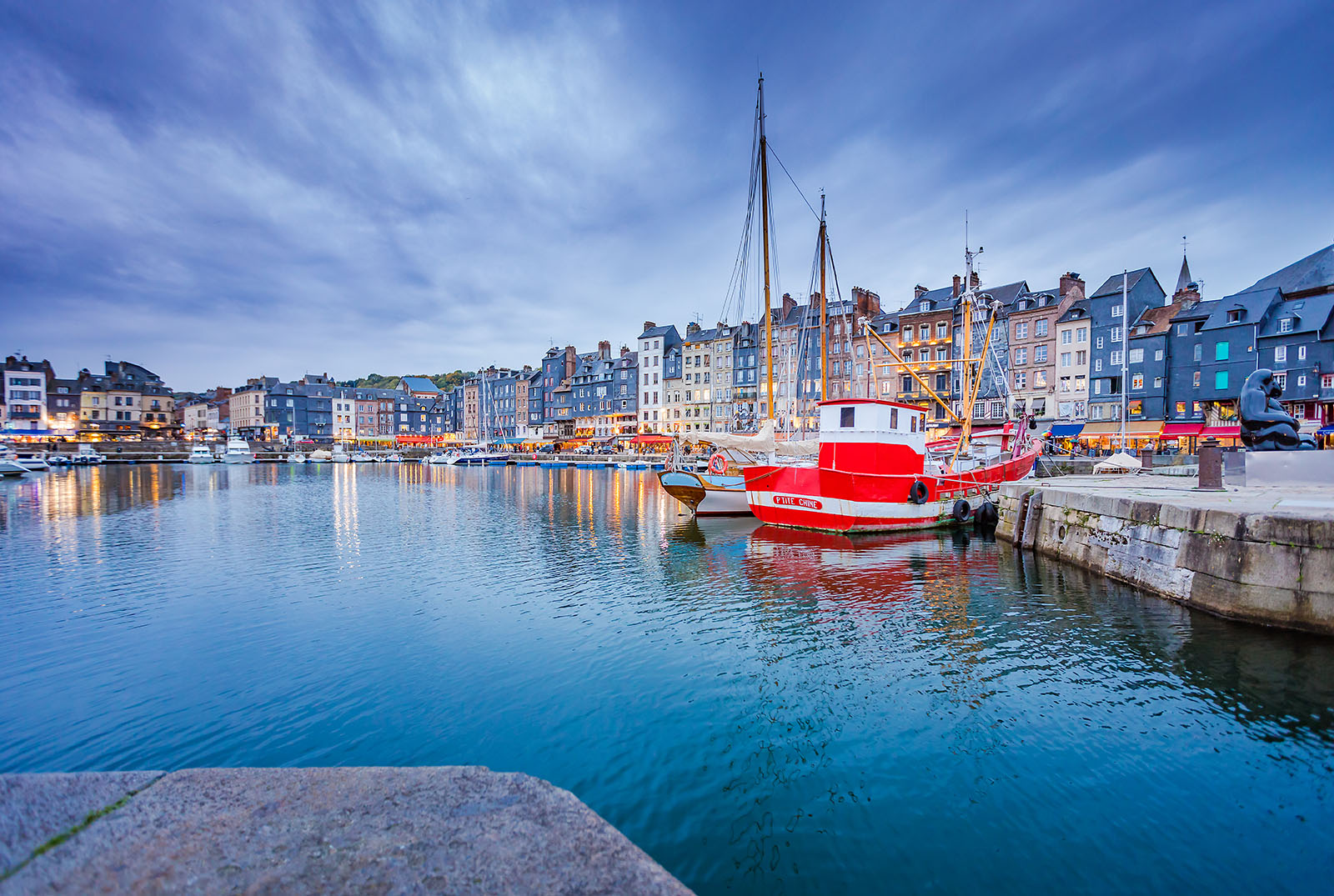
1) Honfleur: Honfleur, dat in de 15de eeuw een belangrijke militaire functie had, is nu een van de charmantste havens van Normandië. Centraal ligt het 17de-eeuwse Vieux Bassin (oude dok) met zijn pittoreske hoge huizen. In de 19de eeuw werd Honfleur een centrum van artistieke creativiteit. De schilder Eugène Boudin werd hier in 1824 geboren en componist Eric Satie in 1866. Honfleur is een van de meest gefotografeerde plekken in Normandië. Het staat vol met gezellige cafés, restaurants en galeries. Een perfecte plaats om heerlijk te wandelen en te verblijven. Honfleur is absoluut een aanrader.
2) Vieux Bassin: De huidige haven werd aangelegd tussen 1681 en 1684. Rondom de haven zie je prachtige huizen uit de 17e en 18e eeuw, vooral aan de Quai Sainte-Catherine en de Quai Saint-Etienne. Ze zijn smal, soms 5-7 verdiepingen hoog, en vaak bedekt met leisteen. Je kunt heerlijk wandelen langs de kades en genieten van de sfeer. Ook een terrasje pakken is een aanrader, er zijn veel cafés en restaurants met uitzicht op de haven.
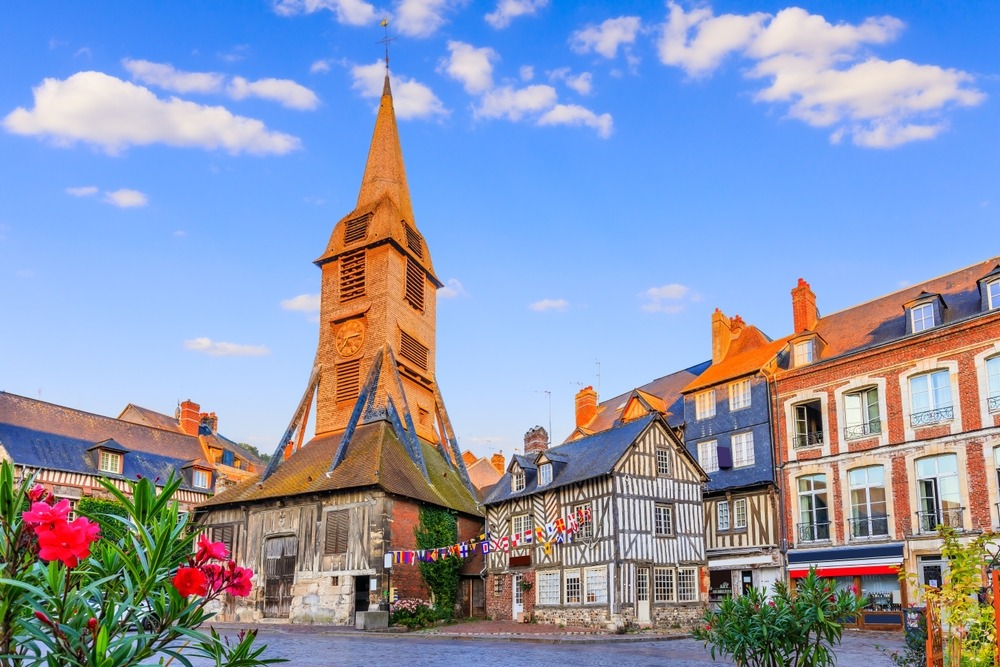
3) Église Sainte-Catherine: Er stond al een stenen kerk gewijd aan Sainte Catherine, waarschijnlijk vanaf de 12e eeuw. Deze stenen kerk werd vernietigd in 1419 door troepen van de Engelse hertog van Salisbury tijdens de Honderjarige Oorlog. De huidige kerk werd gebouwd in de 2e helft van de 15e eeuw, nadat de Engelsen vertrokken waren. De kerk is vrijwel volledig van hout gebouwd en is zelfs de grootste houten kerk van Frankrijk met een scheiding toren (klokkentoren) apart van de kerk zelf. De houten structuur werf uitgevoerd met technieken uit de scheepsbouw, de houten balken, de dakvorm etc lijken op omgekeerde schepen. Je kunt de kerk gratis bezoeken maar je moet wel een kaartje kopen voor een bezoek aan de klokkentoren (3,00 euro) omdat hier het Maritiem Museum gevestigd is. De kerk is dagelijks geopend van 09.00 tot 19.00. In de zomerperiode (juli-augustus) is de kerk tot 20.30 open.
4) La Lieutenance: La Lieutenance is een van de laatste overgebleven delen van de versterkingen (fortificaties) van Honfleur, die gebouwd werden in de 14e eeuw onder koning Karel V. Het gebouw ligt op de plek van de oude Porte de Caen (poort van Caen), de toegangspoort tot de ommuurde stad. Vanaf het einde van de 17e eeuw werd het pand gebruikt als woning voor de 'Lieutenant du Roi" (gezant of vertegenwoordiger van de koning). Daar komt de naam La Lieutenance vandaan. La Lieutenance is te bezoeken zonder gids maar ook met gids. Een toegangskaartje kost 7,00 euro vanaf 26 jaar. Het gebouw is op maandag gesloten.
5) Rue de L'Homme de Bois: Rue de L'Homme de Bois is een van de oudste straatjes in het historische centrum van Honfleur. De straat is typisch voor de Normandische architectuur. Smalle steegjes, vakwerkhuizen, houten of gedeeltelijk houten gevels met kleine winkeltjes, ambachtelijke zaken en restaurantjes.
7) Jardin des Personnalités: Ongeveer op een 15 minuten loopafstand ligt Jardin des Personnalités. De Jardin des Personnalités (Tuin der Persoonlijkheden) is geopend in 2004. Het ligt op een voormalige slibvlakte van de Seine-estuaire, langs de oever. De tuin beslaat zo'n 10 hectare en is ontworpen als rustige groene ruimte waarin je kunt wandelen en ontspannen. Verspreid door de tuin staan borstbeelden van belangrijke figuren uit Honfleur of een band hebben met de stad zoals schrijvers, kunstenaars, zeevaarders of historische personen. Een bezoek aan het park is gratis.
8) Traditionele Zaterdagmarkt: De markt loopt van Cours des Fossés naar Place Sainte-Catherine. Je vindt hier vooral verse lokale producten van de Normandische streek. Er is voldoende groenten, fruit en vis te vinden. Daarnaast zijn er ook bloemenmarkten, kleding en souvenirs te vinden. De markt staat hier elke zaterdagochtend van 08.30 tot 13.00 gedurende het hele jaar.

1) Honfleur: Honfleur, which played an important military role in the 15th century, is now one of Normandy’s most charming ports. At the heart of the town is the 17th-century Vieux Bassin (Old Dock), with its picturesque tall houses. In the 19th century, Honfleur became a centre of artistic creativity. Painter Eugène Boudin was born here in 1824, and composer Eric Satie in 1866. Honfleur is one of the most photographed places in Normandy. It's full of charming cafés, restaurants, and galleries. A perfect place for walking and relaxing. Honfleur is highly recommended.
2) Vieux Bassin: The current harbor was built between 1681 and 1684. Around the harbor, you'll see beautiful houses from the 17th and 18th centuries, especially on Quai Sainte-Catherine and Quai Saint-Étienne. They are narrow, sometimes 5-7 stories high, and often covered with slate. It's lovely to stroll along the quays and enjoy the atmosphere. Relaxing on a terrace is also highly recommended; there are many cafés and restaurants with harbor views.
3) Église Sainte-Catherine: There was already a stone church dedicated to Saint Catherine, probably from the 12th century. This stone church was destroyed in 1419 by troops of the English Duke of Salisbury during the Hundred Years' War. The current church was built in the second half of the 15th century, after the English had left. The church is built almost entirely of wood and is even the largest wooden church in France, with a separate tower (bell tower) separate from the church itself. The wooden structure was constructed using shipbuilding techniques; the wooden beams, roof shape, etc., resemble inverted ships. The church is free to visit, but you must purchase a ticket to the bell tower (€3.00) because the Maritime Museum is located here. The church is open daily from 9:00 AM to 7:00 PM. During the summer months (July-August), it is open until 8:30 PM.
4) La Lieutenance: La Lieutenance is one of the last remaining parts of Honfleur's fortifications, built in the 14th century under King Charles V. The building stands on the site of the old Porte de Caen (Caen Gate), the gateway to the walled city. From the end of the 17th century, the building served as the residence of the "Lieutenant du Roi" (the king's envoy or representative). This is where the name "La Lieutenance" comes from. La Lieutenance can be visited with or without a guide. An entrance ticket costs €7.00 for those aged 26 and over. The building is closed on Mondays.
5) Rue de L'Homme de Bois: Rue de L'Homme de Bois is one of the oldest streets in Honfleur's historic center. The street is typical of Norman architecture. Narrow alleys, half-timbered houses, timber-framed or partially timber-framed facades with small shops, craft stores, and restaurants.
6) Musée Eugène Boudin: The museum was founded on April 11, 1868, at the initiative of the artist Louis-Alexandre Dubourg, a native of Honfleur. The idea was to give citizens access to visual arts. Today you can view large collections of paintings, drawings and engravings by Eugène Boudin here. Works by other artists associated with Honfleur and the region can also be viewed. Objects, clothing, lace, furniture, accessories, and dolls are also on display. Opening hours may vary depending on the season.
7) Jardin des Personnalités: About a 15-minute walk away lies the Jardin des Personnalités. The Jardin des Personnalités (Garden of Personalities) opened in 2004. It is located on a former silt plain of the Seine estuary, along the bank. The garden covers approximately 10 hectares and is designed as a peaceful green space where you can walk and relax. Scattered throughout the garden are busts of important figures from Honfleur or those with connections to the city, such as writers, artists, sailors, or historical figures. A visit to the park is free.
8) Traditional Saturday market: The market runs from Cours des Fossés to Place Sainte-Catherine. Here you will mainly find fresh local products from the Normandy region. There's plenty of fruit, vegetables, and fish to be found. There are also flower markets, clothing, and souvenirs. The market is held here every Saturday morning from 8:30am to 1pm all year round.
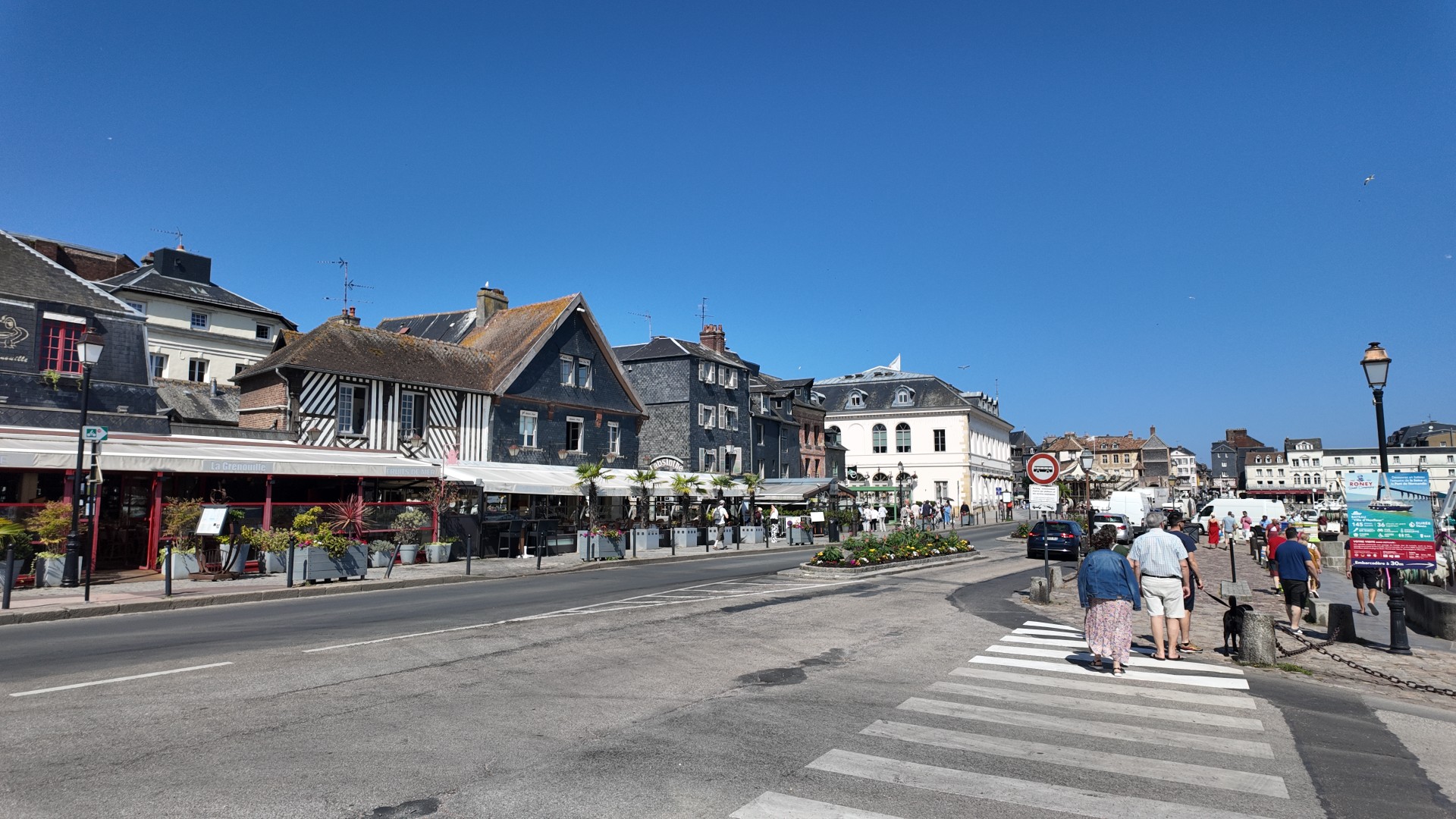
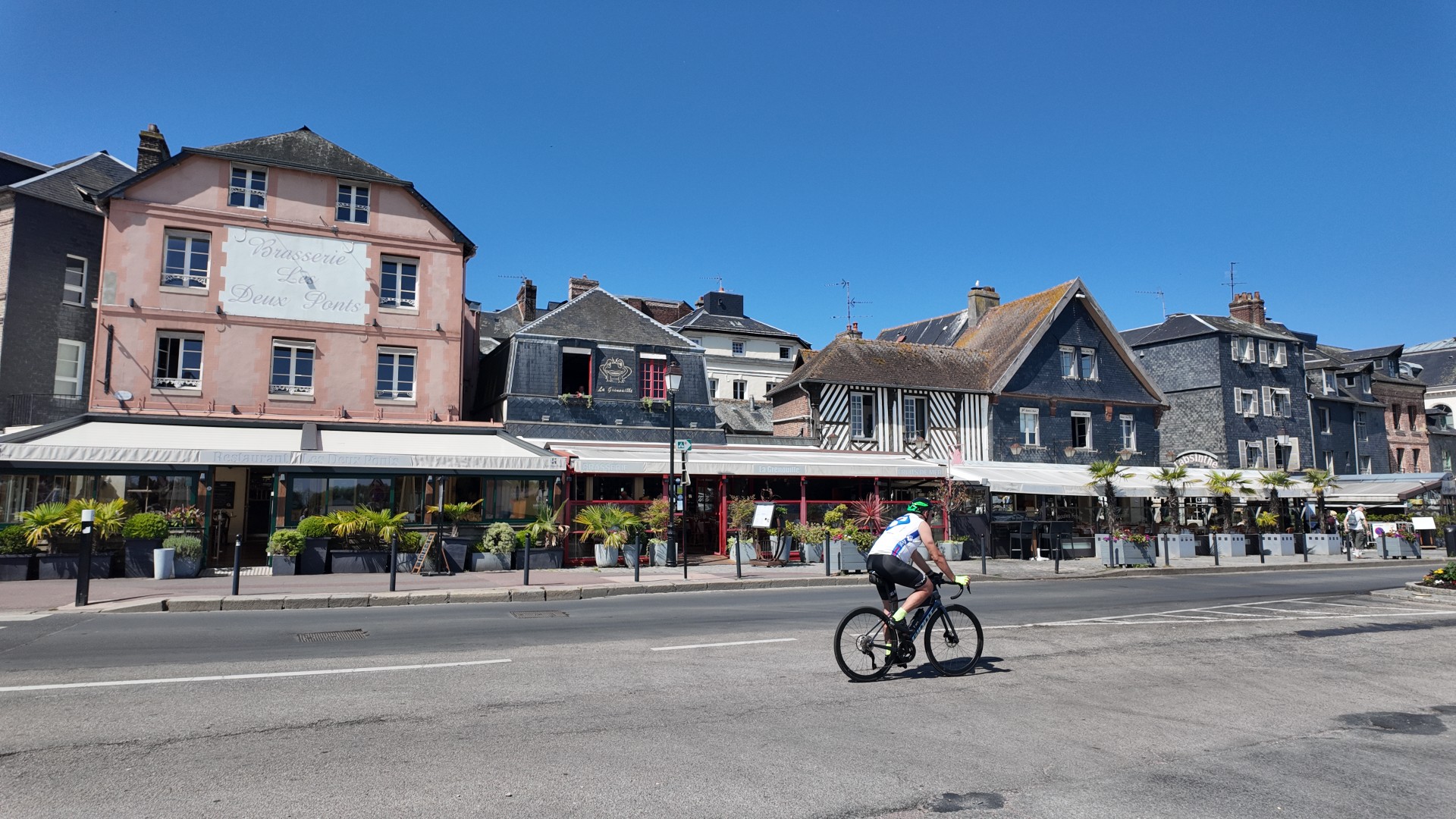
Honfleur wordt al genoemd in documenten uit de 11e eeuw. Het was toen een versterkt havenstadje met belangrijke strategische waarde aan de monding van de Seine, tegenover Le Havre.
Honfleur is mentioned in documents dating back to the 11th century. It was then a fortified port town of important strategic value at the mouth of the Seine, opposite Le Havre.
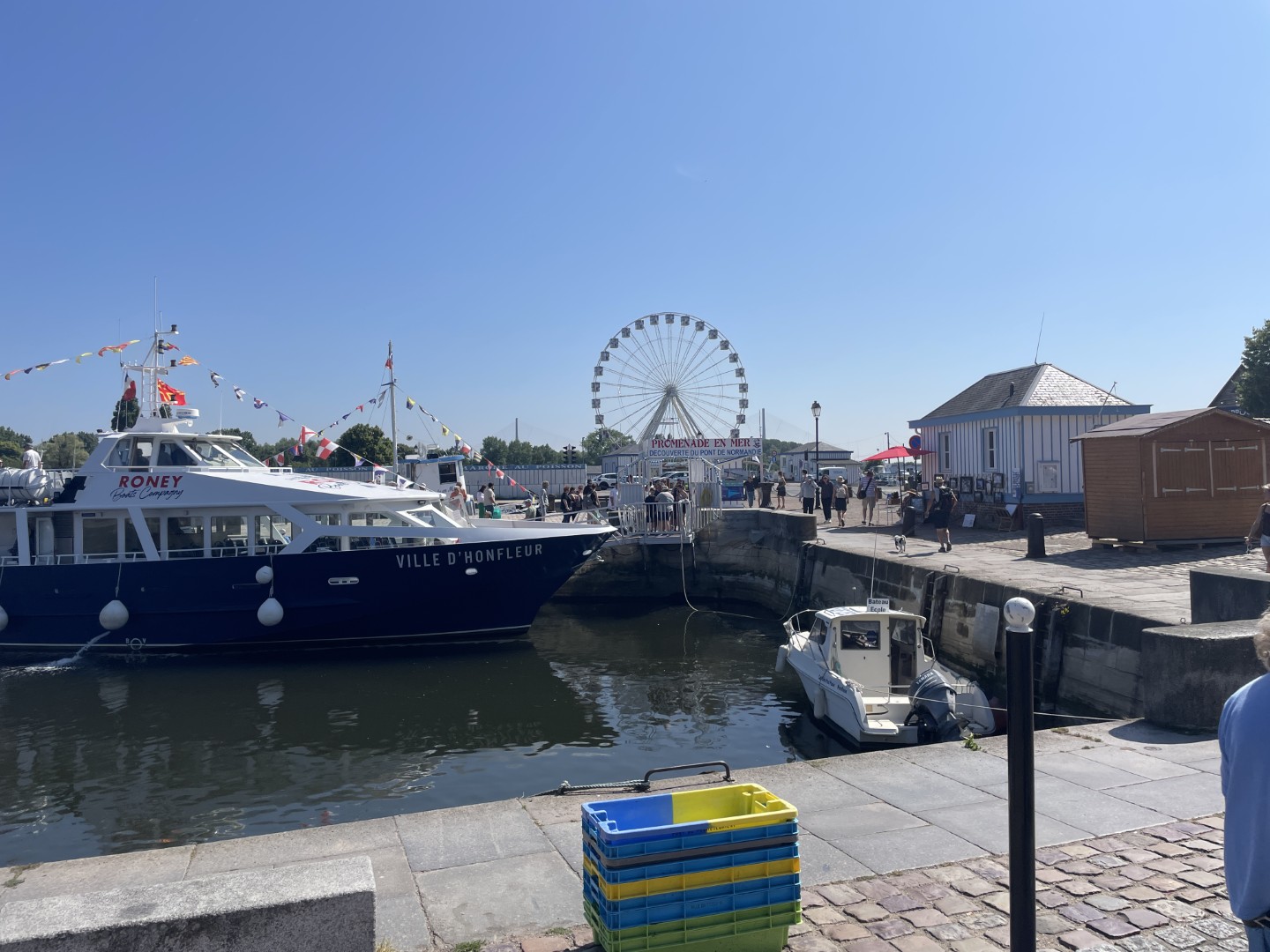
In de 16e en 17e eeuw groeide Honfleur uit tot een belangrijke zeehaven. Van hieruit vertrokken ontdekkingsreizigers naar de Nieuwe Wereld onder wie Samuel de Champlain, die in 1608 Québec (Canada) stichtte.
In the 16th and 17th centuries, Honfleur grew into an important seaport. From here, explorers set sail for the New World, including Samuel de Champlain, who founded Quebec (Canada) in 1608.
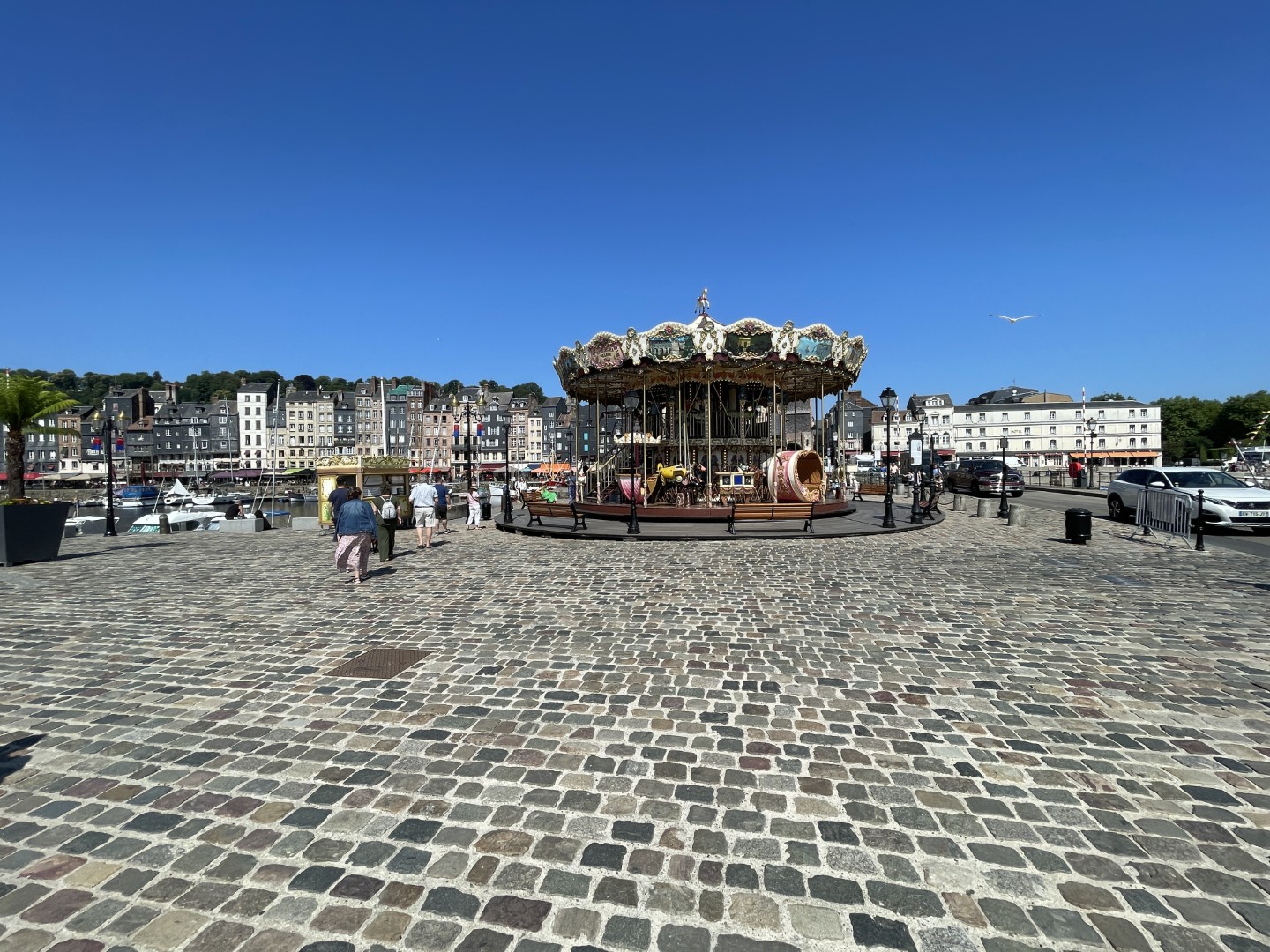
Aan de Le Vieux Bassin staat de carrousel bij de Place de la Mairie. Het is een copy van de carrousels uit de jaren 1900 met houten paarden.
The carousel is located at the Place de la Mairie at the Le Vieux Bassin. It's a replica of the wooden horse carousels from the 1900s.
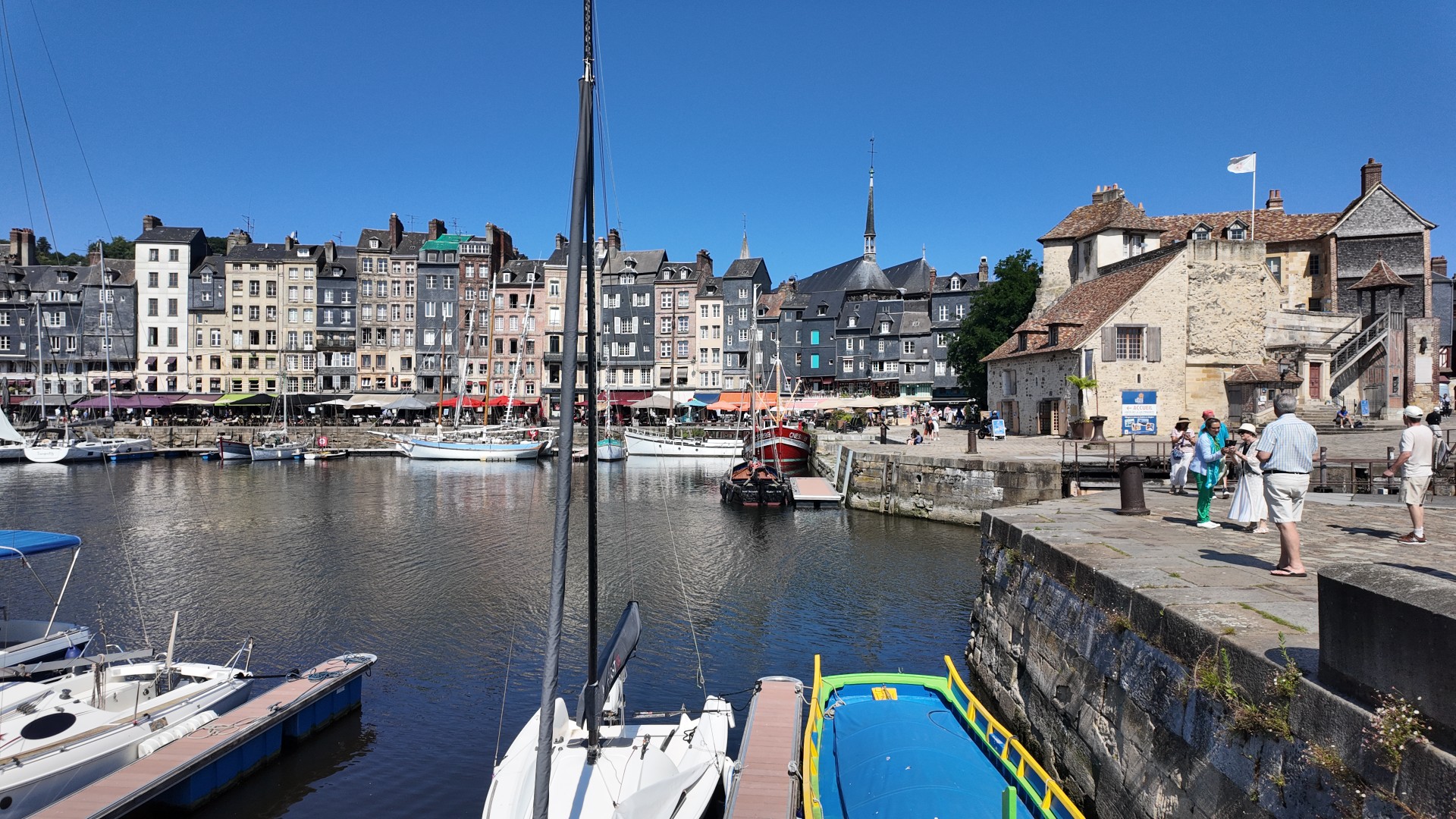
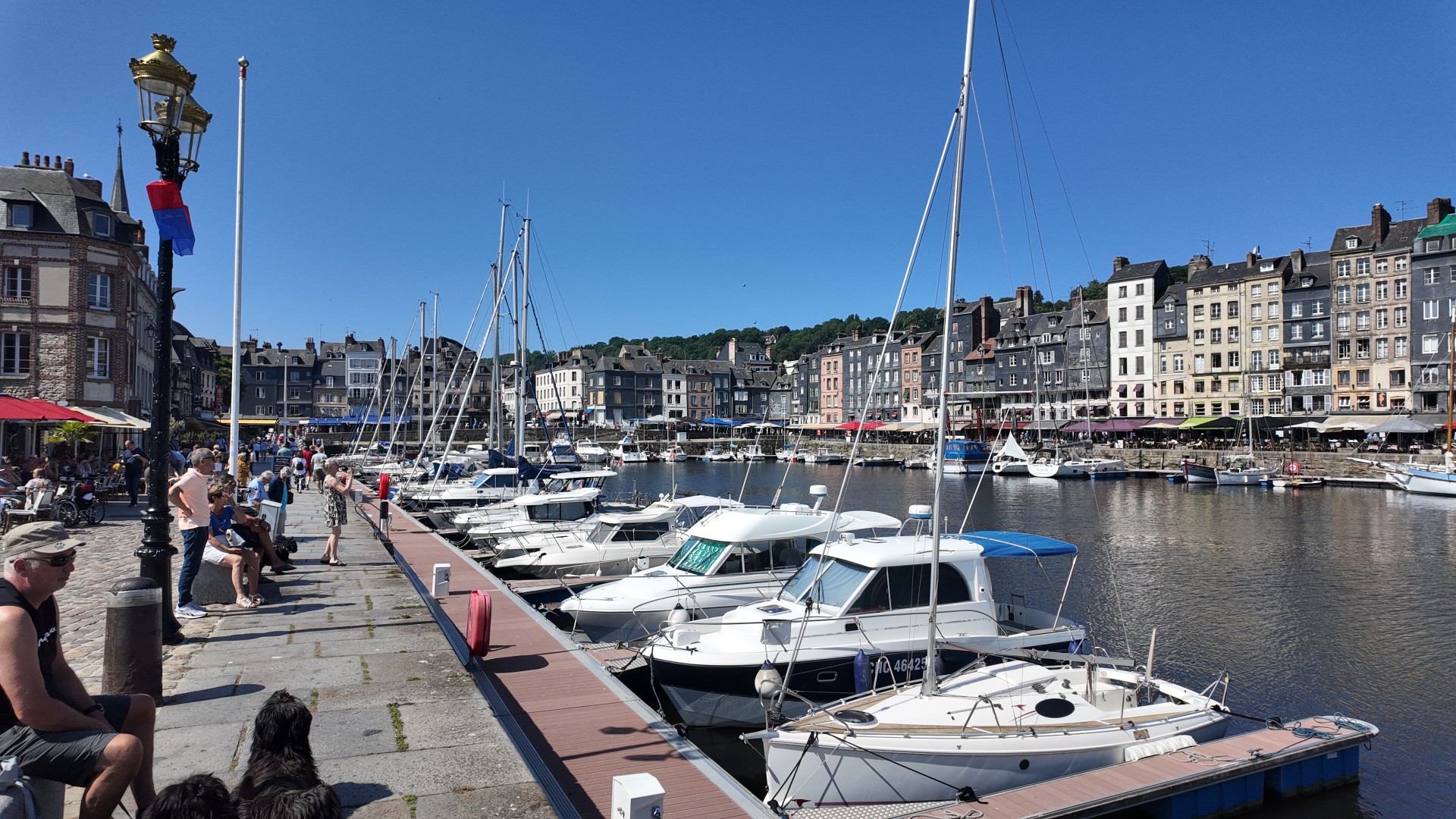
Vieux Bassin betekent "oude basin" of oude havenkom. Het is de historische haven van Honfleur.
Vieux Bassin means "old basin"or old harbor basin. It is the historic harbor of Honfleur.
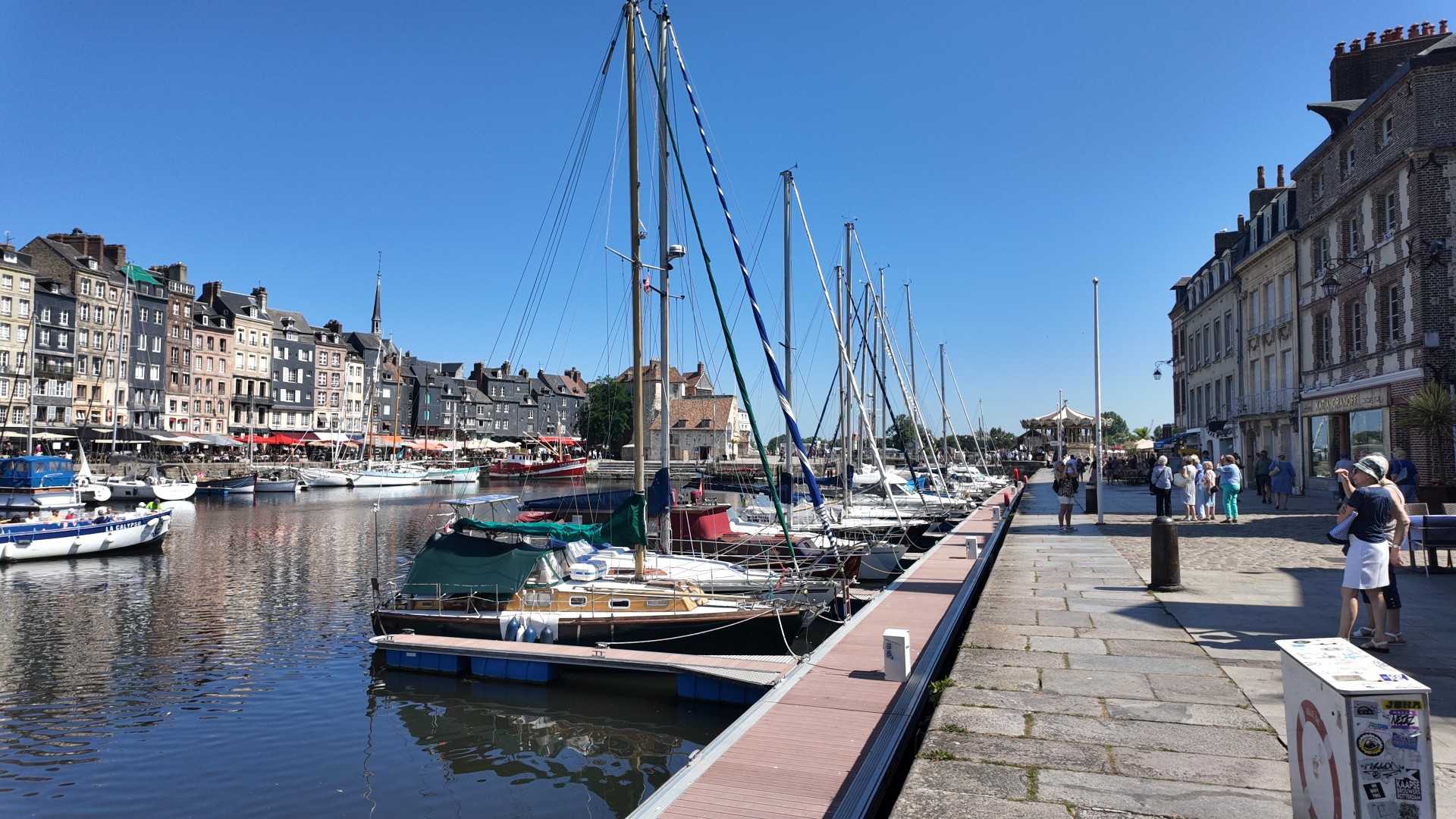
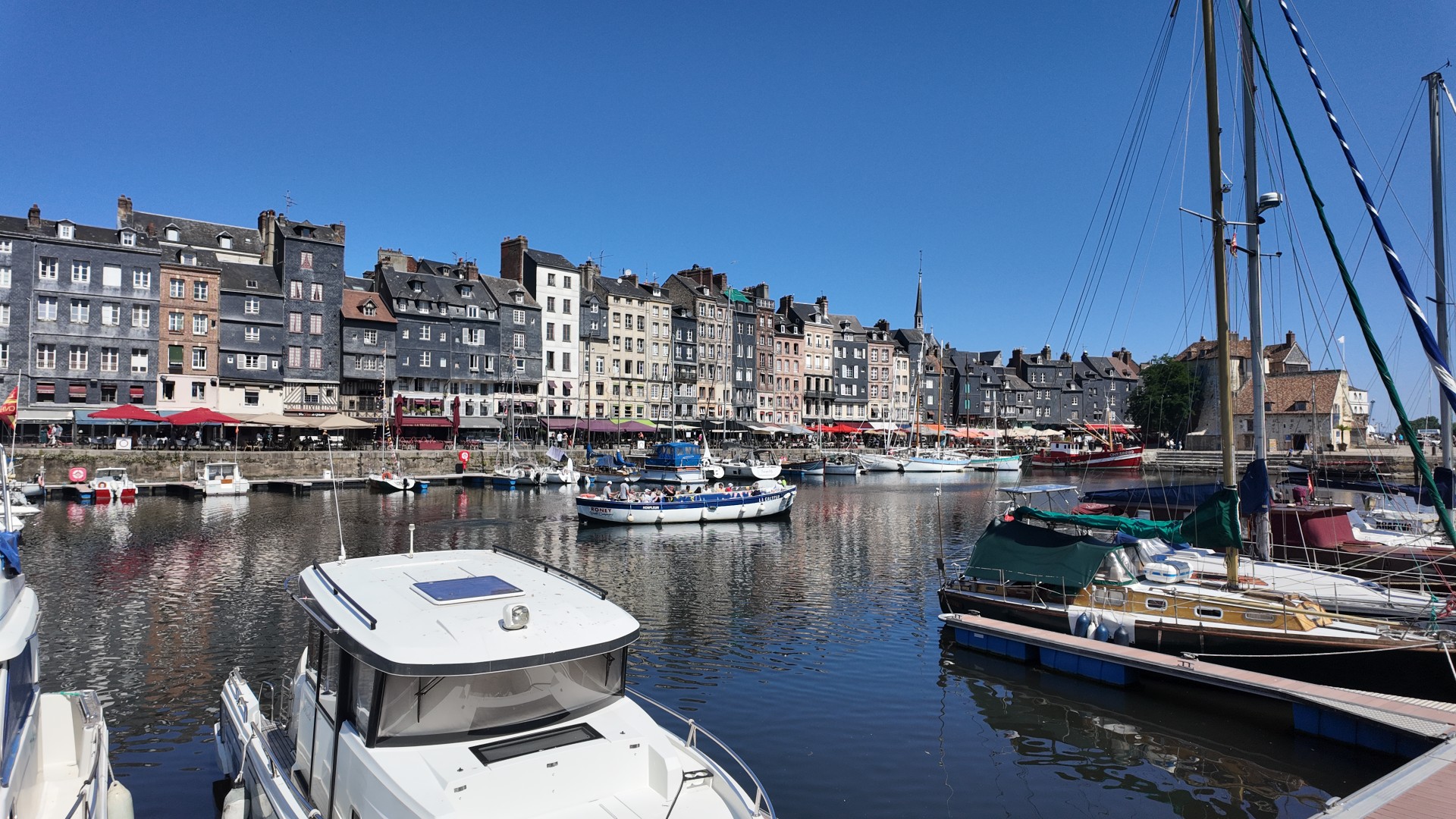
Oorspronkelijk was het Vieux Bassin een haven voor vissers, handelsschepen en de kustvaart. Later werden er ook vanaf hier expedities georganiseerd (zie film).
Originally, the Vieux Bassin was a port for fishing, trading ships, and coastal shipping. Later, expeditions were also organized from here (see film).
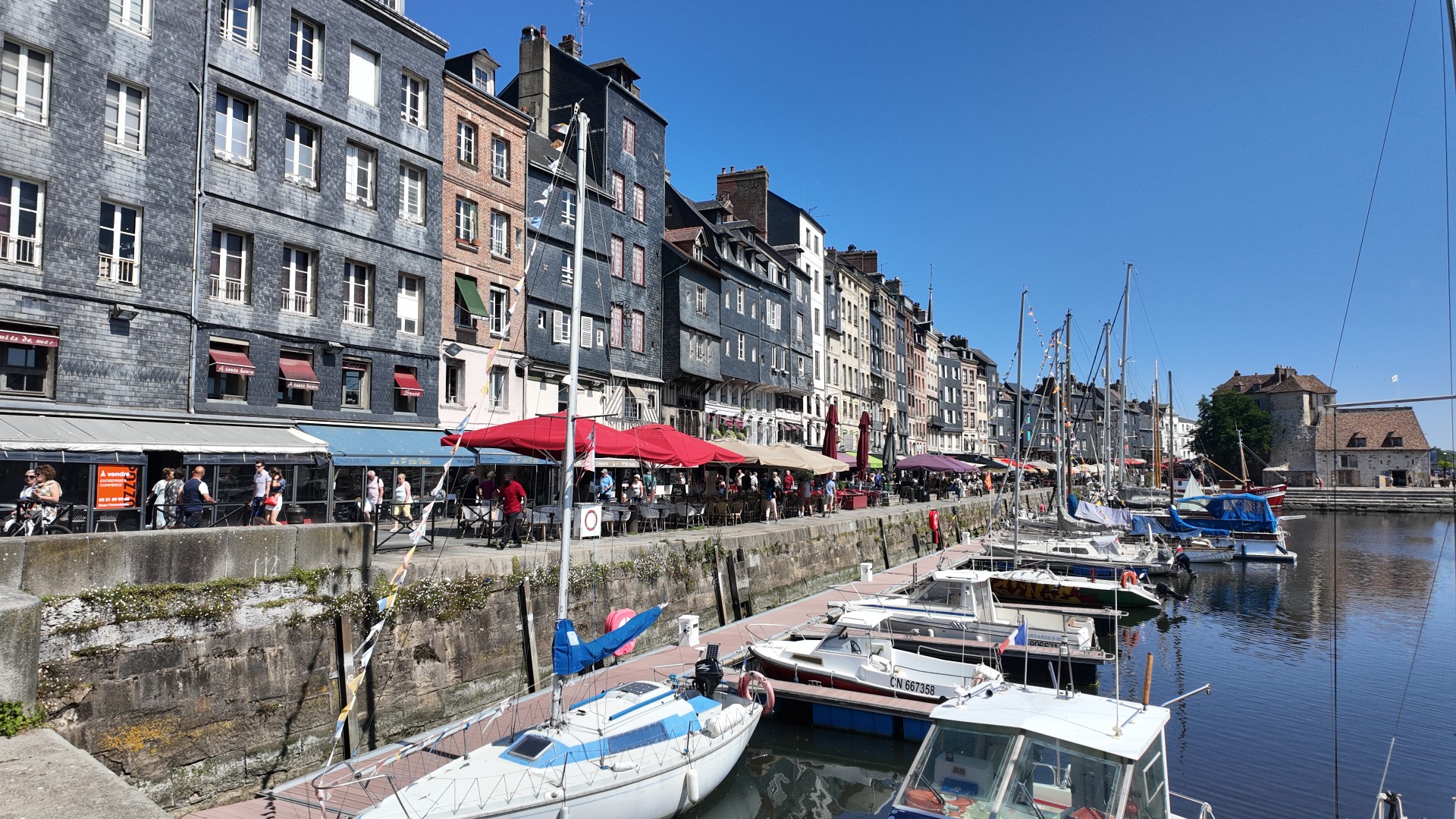
Rond het bassin staan smalle, hoge huizen, vaak met leien gevels (ardoises) vooral langs Quai Sainte-Catherine en langs Quai Saint-Étienne. Veel huizen stammen uit de 17e en 18e eeuw.
Around the basin tall housrs, often with slate facades (ardoises), line the basin, especially along Quai Sainte-Catherine and Quai Saint-Étienne. Many houses date from the 17th and 18th centuries.
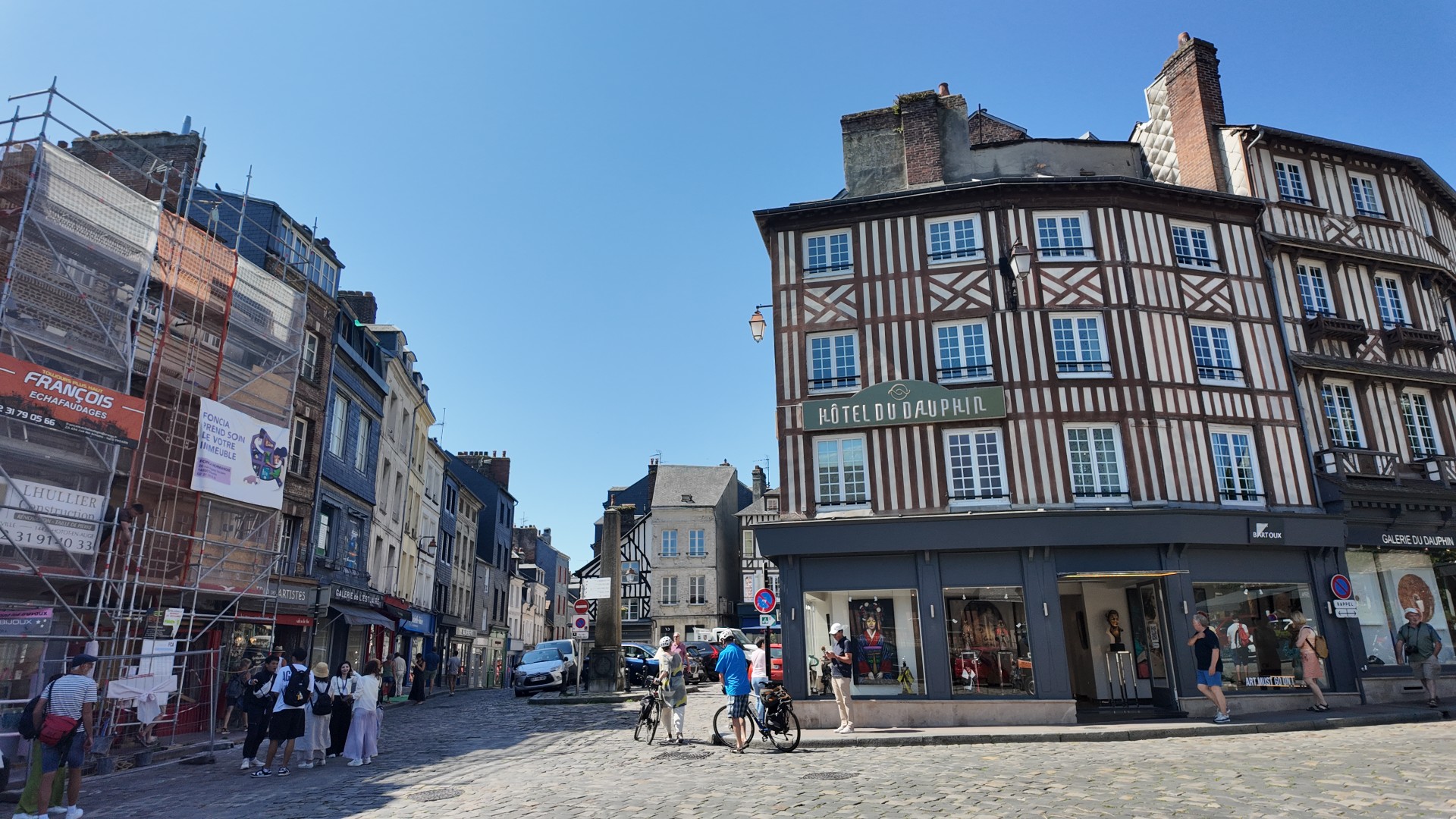
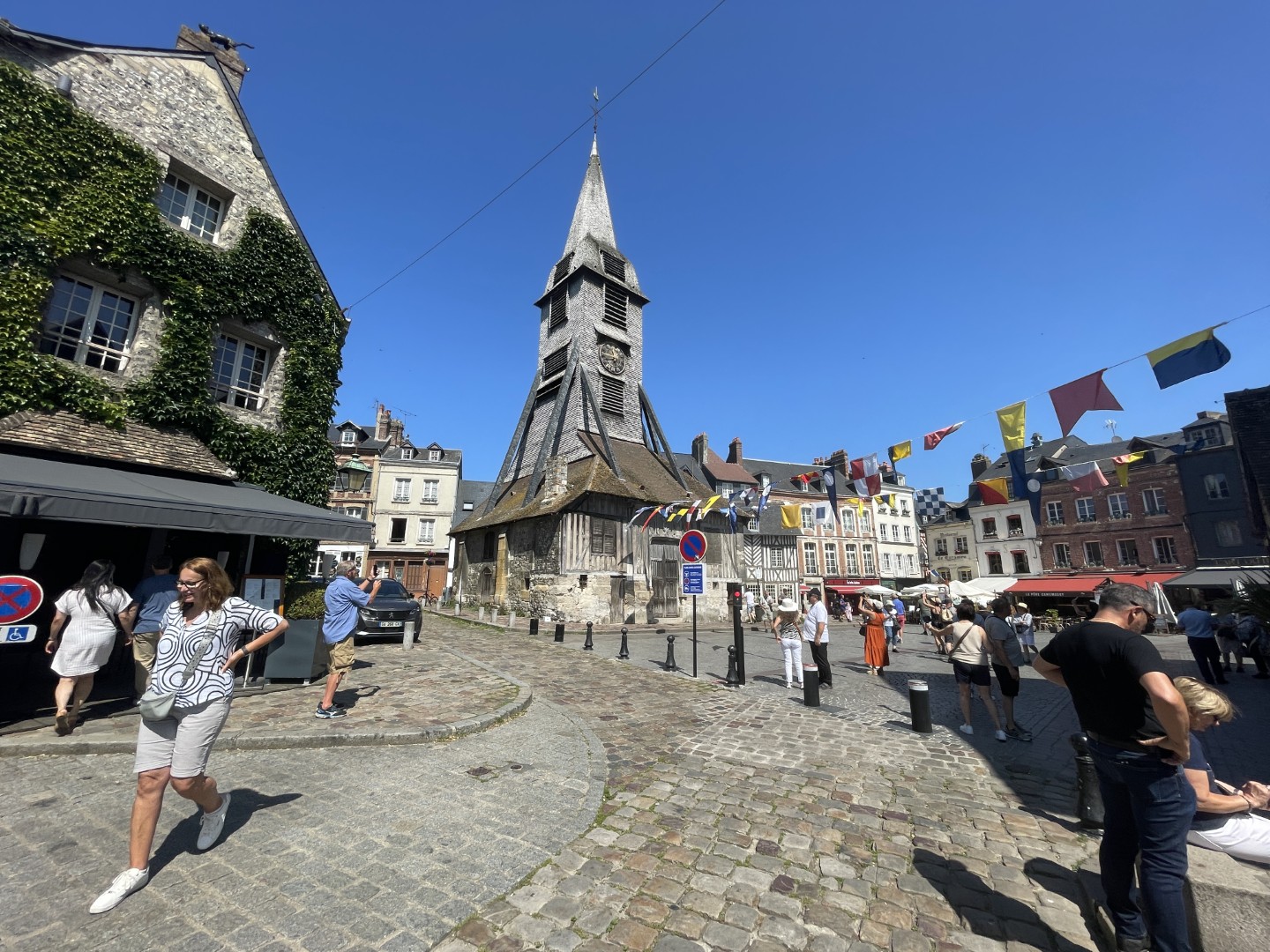
De Sint-Catharinakerk (Église Sainte-Catherine) in Honfleur is echt bijzonder. Hij steekt op meerdere manieren af van typische kerken. De huidige houten kerk dateerd van de tweede helft van de 15e eeuw.
The Saint Catherine Church (Église Sainte-Catherine) in Honfleur is truly special. It differs from typical churches in several ways. The current wooden church dates from the second half of the 15th century.
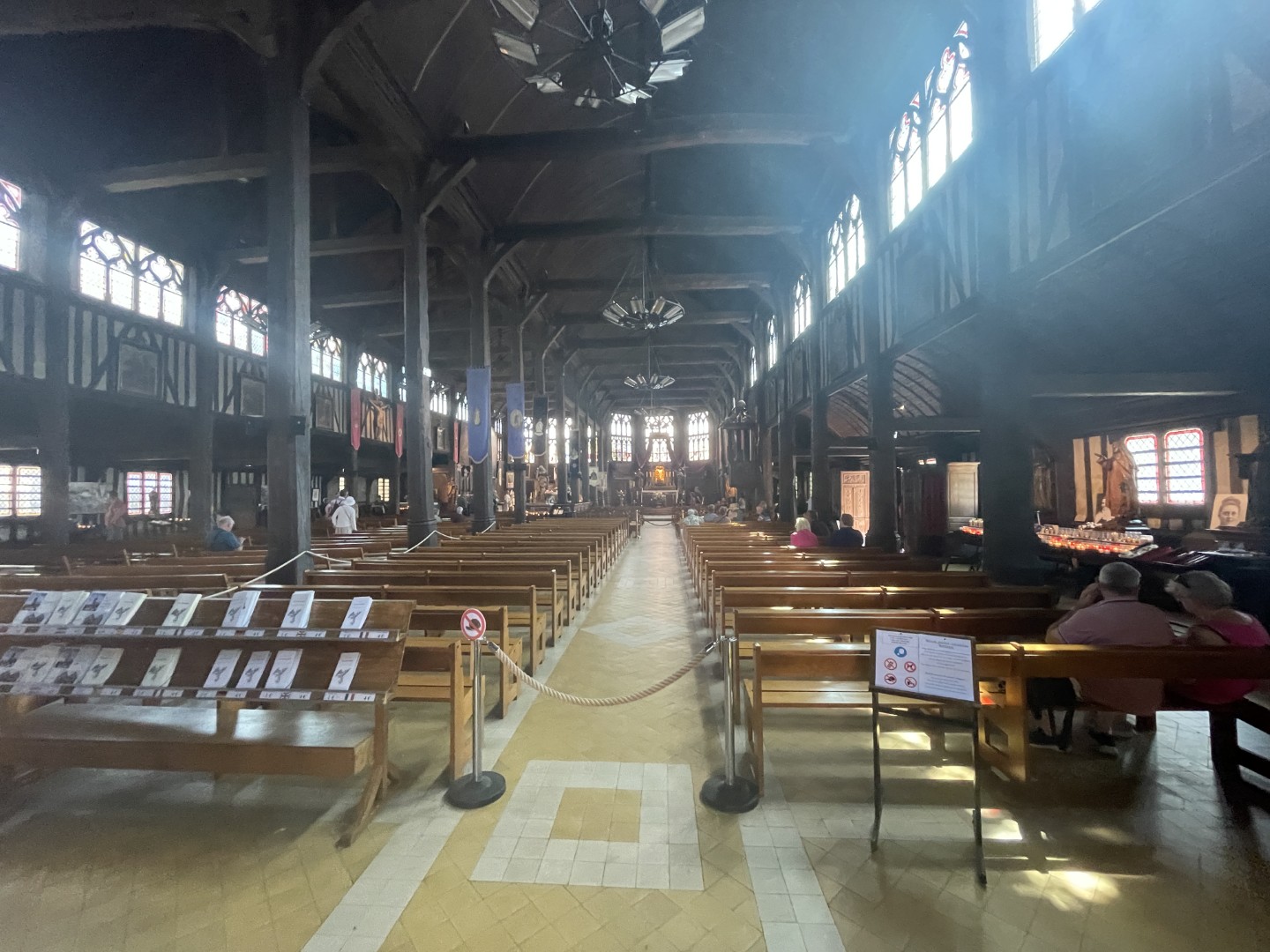
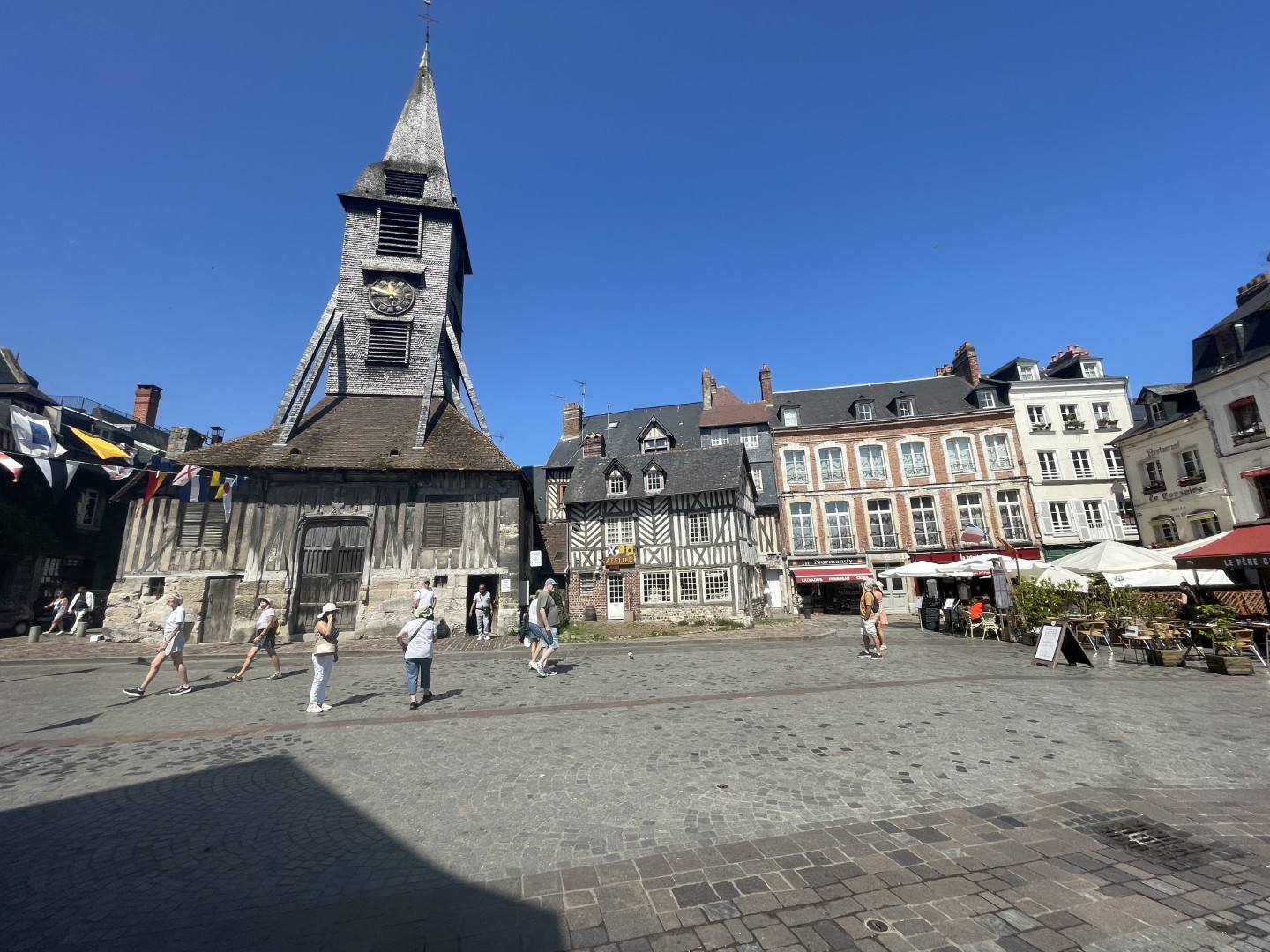
Hij werd gebouwd nadat de vorige stenen kerk verwoest was tijdens de Honderdjarige Oorlog. De klokkentoren staat apart van de kerk. Dit is gedaan om de kerk te beschermen tegen brand, bijvoorbeeld door blikseminslag (zie film).
It was built after the previous stone church was destroyed during the Hundred Years War. The bell tower stands separate from the church. This was done to protect the church from fire, for example, from lightning strikes (see film).
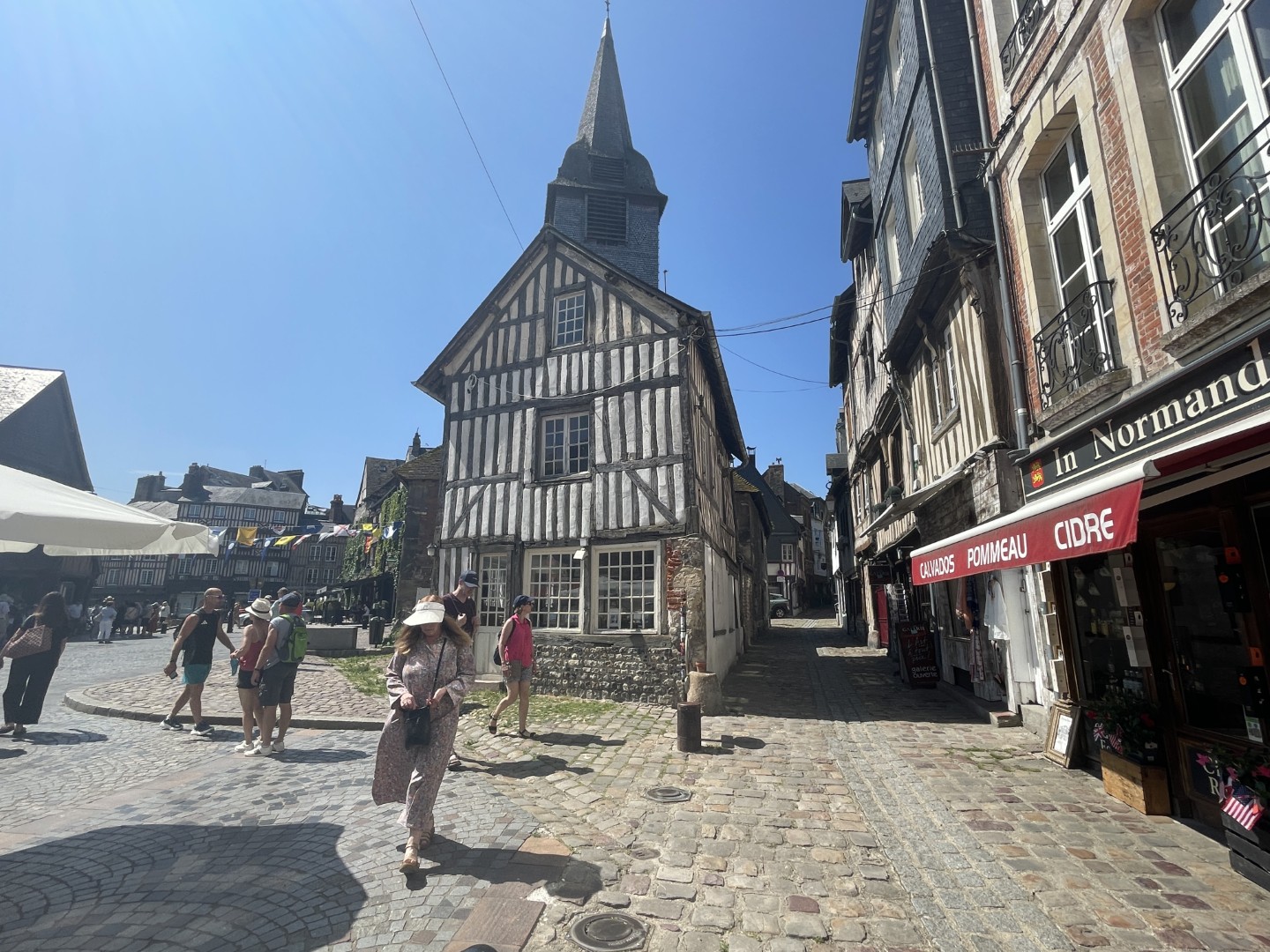
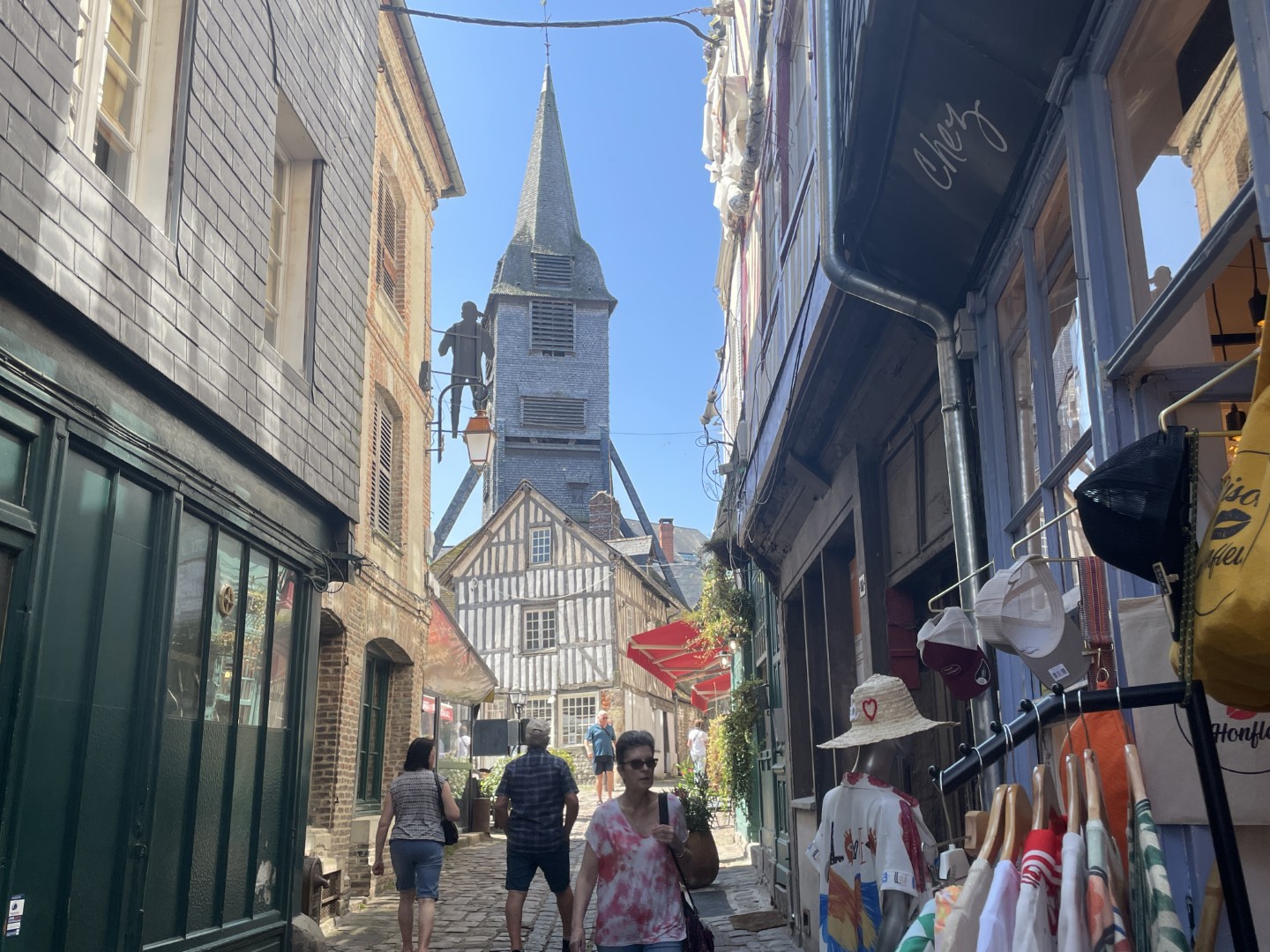
De Rue des Lingots is een van de oudste straten in de wijk Sainte-Catherine. De straat staat bekend om zijn oude vakwerkhuizen, geplaveide bestrating en een goed bewaard gebleven middeleeuwse sfeer.
Rue des Lingots is one of the oldest streets in the Sainte-Catherine district. It is known for its old half-timbered houses, cobblestone pavement, and well-preserved medieval atmosphere.
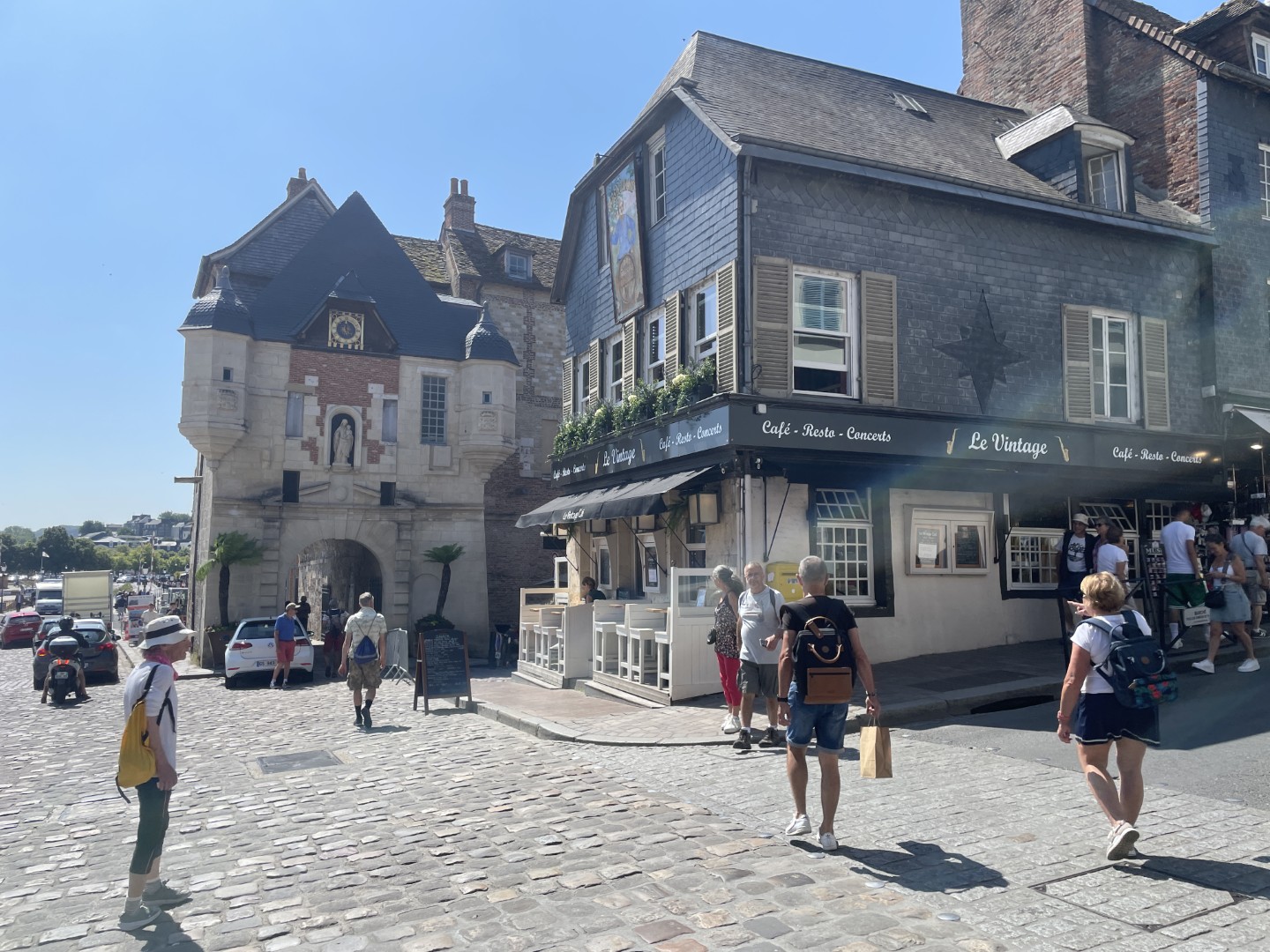
La Lieutenance (hier op de foto) is een monumentaal gebouw ("ancien bâtiment") dat vroeger dienst deed als logement van de Lieutenant du Roi, de vertegenwoordiger van de koning.
La Lieutenance (pictures here) is a monumental building ('ancien bâtiment) that used to serve as the lodgings of the Lieutenant du Roi, the king's representative.
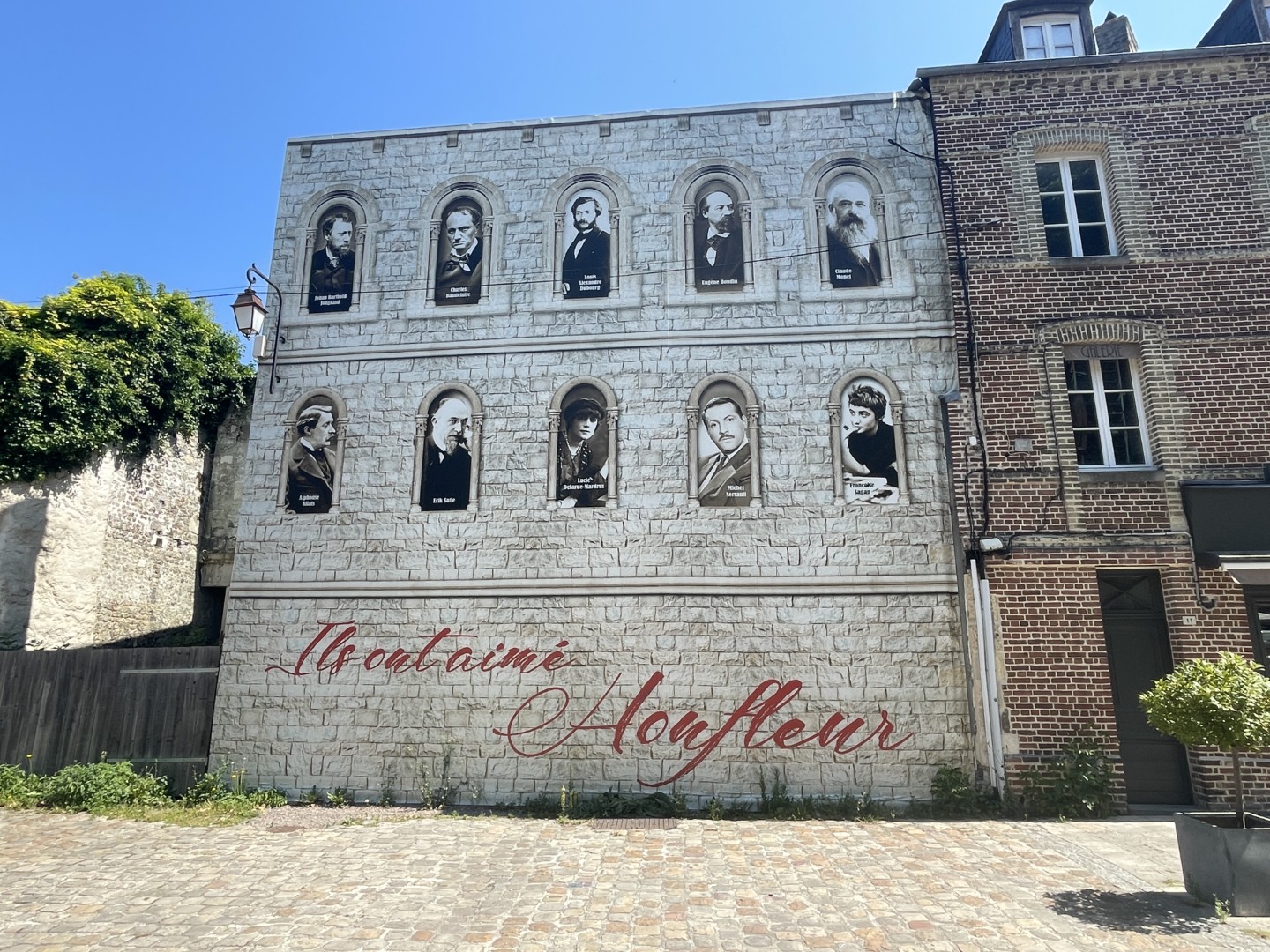
Deze muurschildering met 10 portretten en de tekst "Ils ont aimé Honfleur" (zij hielden van Honfleur) is een eerbetoon aan bekende figuren die een band hadden met de stad. Deze muurschildering bevindt zich op een gevel in Rue des Buttes, in het centrum van Honfleur, vlak bij de oude haven.
This mural, featuring 10 portraits and the inscription "Ils ont aimé Honfleur" (They Loved Honfleur), pays tribute to famous figures who had a connection to the city. It's located on a facade on Rue des Buttes, in the center of Honfleur, near the old harbor.
@ MK
