 Welkom in Europa
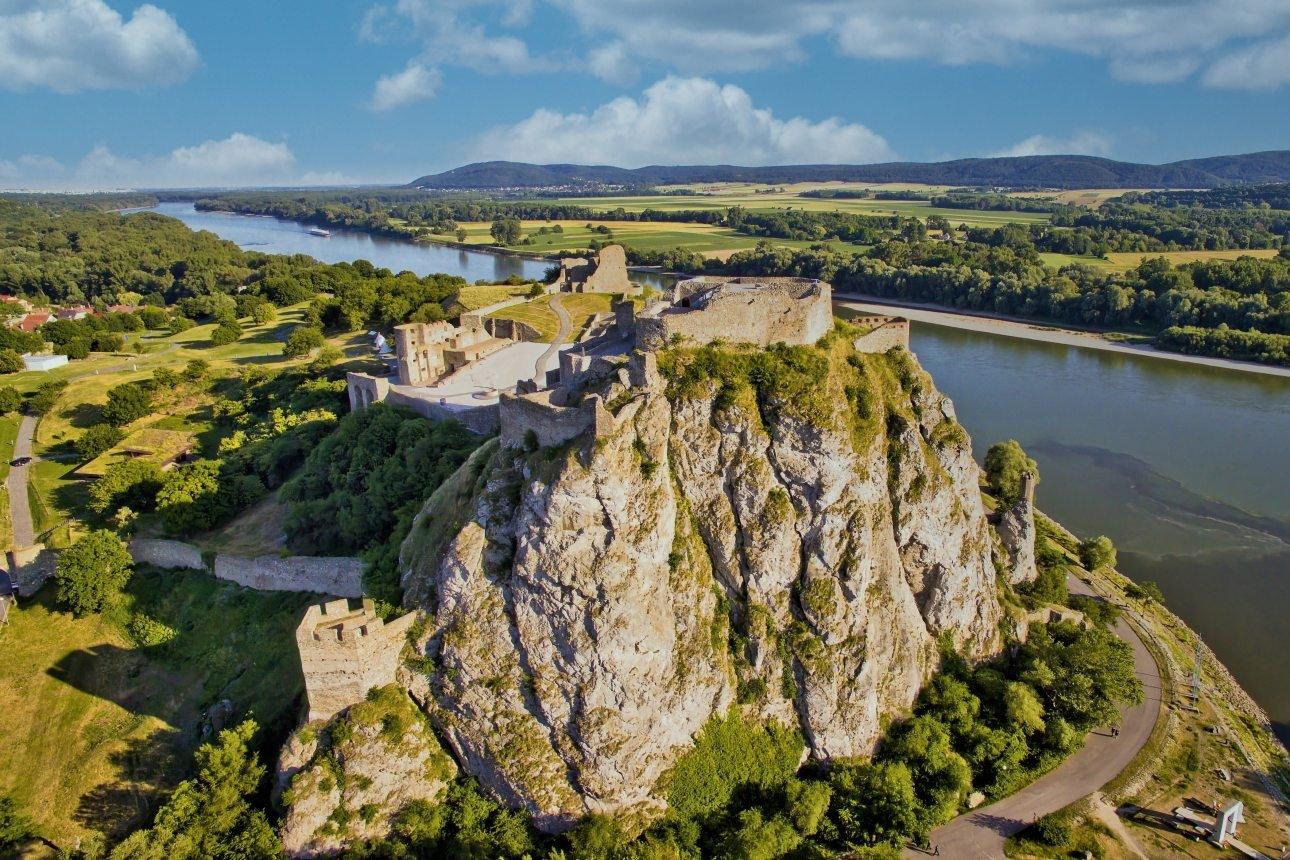
DEVIN CASTLE
BEZIENSWAARDIGHEDEN / HIGHLIGHTS
Tips Devin Castle 2026:
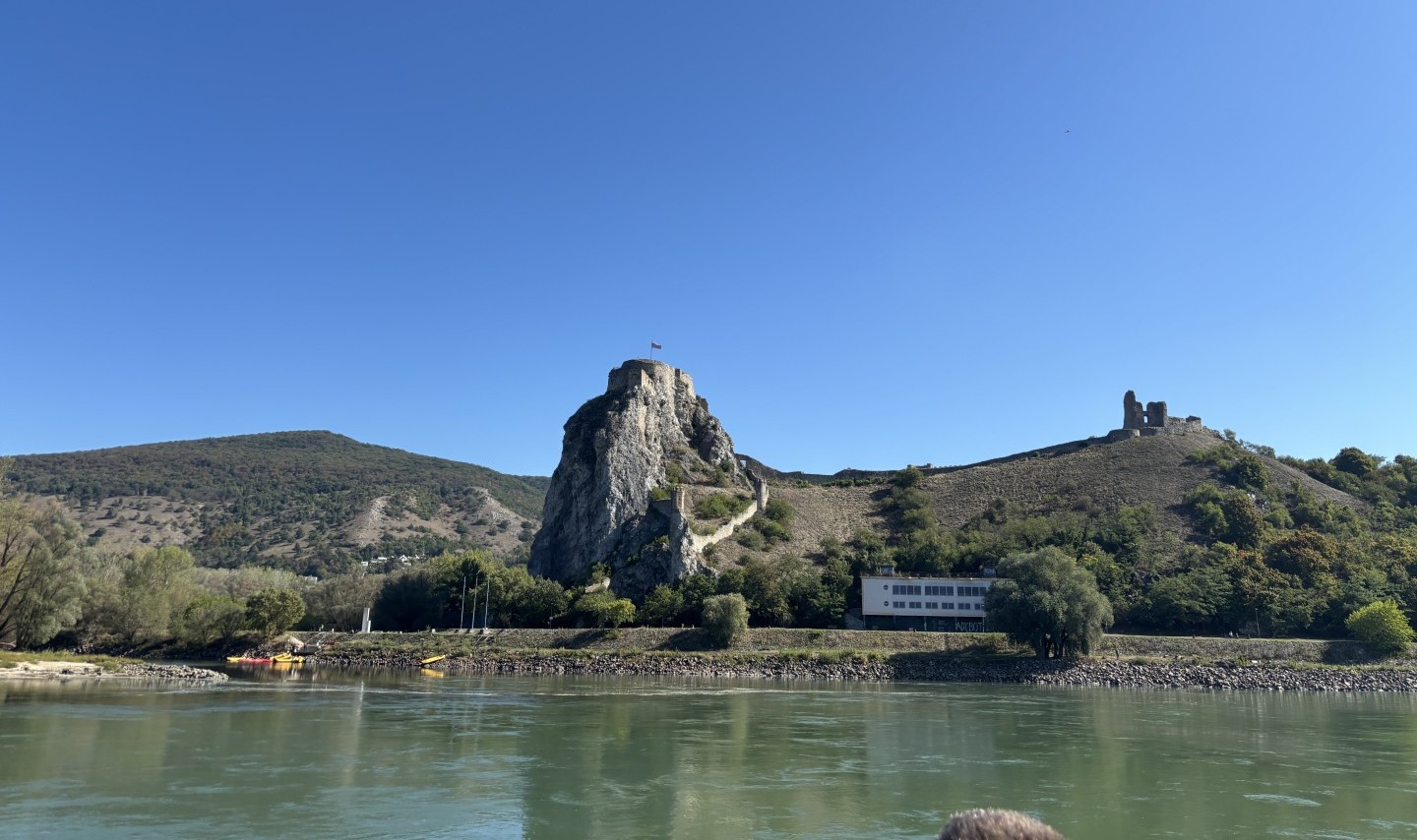
1) Devin Castle: Devin Castle is een van de bekendste en belangrijkste historische kastelen van Slowakije. Het kasteel ligt in het dorp Devín, ongeveer 10 kilometer van het centrum van Bratislava. Het kasteel is gebouwd op een hoge rots, ongeveer 212 meter boven zeeniveau. Het staat op een unieke locatie waar twee grote rivieren, de Donau en de Morava, samenkomen. Door deze verhoogde ligging vervulde het kasteel ooit een belangrijke strategische functie; vanuit het kasteel was het mogelijk om vanaf grote afstand vijanden en naderende legers te spotten. Tegenwoordig is het kasteel van Devín een populaire toeristische attractie. Bezoekers komen de historische overblijfselen bekijken, leren meer over de geschiedenis ervan en genieten van het prachtige uitzicht over de rivieren en de omgeving. De entree kost 6,00 EURO voor volwassenen in het winterseizoen en 8,00 EURO in het zomerseizoen.
2) Boottocht: Vanuit Bratislava kun je een mooie boottocht maken over de Donau naar het Devin kasteel. Deze boottocht is een leuke manier om de omgeving van Bratislava te ontdekken en tegelijkertijd een bijzondere bezienswaardigheid te bezoeken. Tijdens de tocht vaar je over de Donau. Onderweg kun je genieten van het uitzicht op de stad, de natuur en verschillende historische plekken. De eindbestemming is Devín, waar het indrukwekkende Devín Castle op een hoge rots staat. De boottocht naar Devín Castle duurt 1,5 uur (tegen de stroom in) en de boottocht terug naar Bratislava duurt een half uur. Er zijn meerdere aanbieders maar de bekendste zijn Blue Danube Tours en LOD - Slovak Shipping and Ports. Een retour ticket kost 25,00 EURO per persoon bij beide aanbieders.
3) Bus: Je kunt ook bus 29 nemen vanaf Most SNP in het centrum van Bratislava naar kasteel Devín. De busrit duurt ongeveer 20-25 minuten en de busrit is stukken goedkoper dan de rit met de boot (retour ongeveer 2,20 EURO). Je kunt makkelijk met je betaalpas of creditcard betalen.

1) Devin Castle: Devín Castle is one of the best-known and most significant historical castles in Slovakia. It is located in the village of Devín, approximately 10 kilometers (6.2 miles) from the center of Bratislava. The castle is built on a high rock, about 212 meters (695 feet) above sea level. It stands in a unique location where two major rivers, the Danube and the Morava, meet. Due to this elevated position, the castle once served an important strategic function; from the castle, it was possible to spot enemies and approaching armies from a great distance. Today, Devín Castle is a popular tourist attraction. Visitors come to view the historical remains, learn more about their history, and enjoy the beautiful view over the rivers and the surrounding area. Admission is 6.00 EUR for adults during the winter season and 8.00 EUR during the summer season.
2) Boat trip: From Bratislava, you can take a scenic boat trip along the Danube River to Devín Castle. This boat trip is a great way to explore the area around Bratislava while also visiting a unique landmark. The journey takes you along the Danube River, offering views of the city, the surrounding natural landscape, and various historical sites. The final destination is Devín, home to the impressive Devín Castle, which stands atop a high cliff. The trip to Devín Castle takes 1.5 hours (traveling against the current), while the return journey to Bratislava takes half an hour. There are several operators, the most well-known being Blue Danube Tours and LOD – Slovak Shipping and Ports. A return ticket costs 25.00 euros per person with both providers.
3) Bus: You can also take bus 29 from Most SNP in the center of Bratislava to Devín Castle. The bus journey takes about 20–25 minutes and is significantly cheaper than the boat trip (a round trip costs approximately 2.20 EURO). You can easily pay with your debit card or credit card.
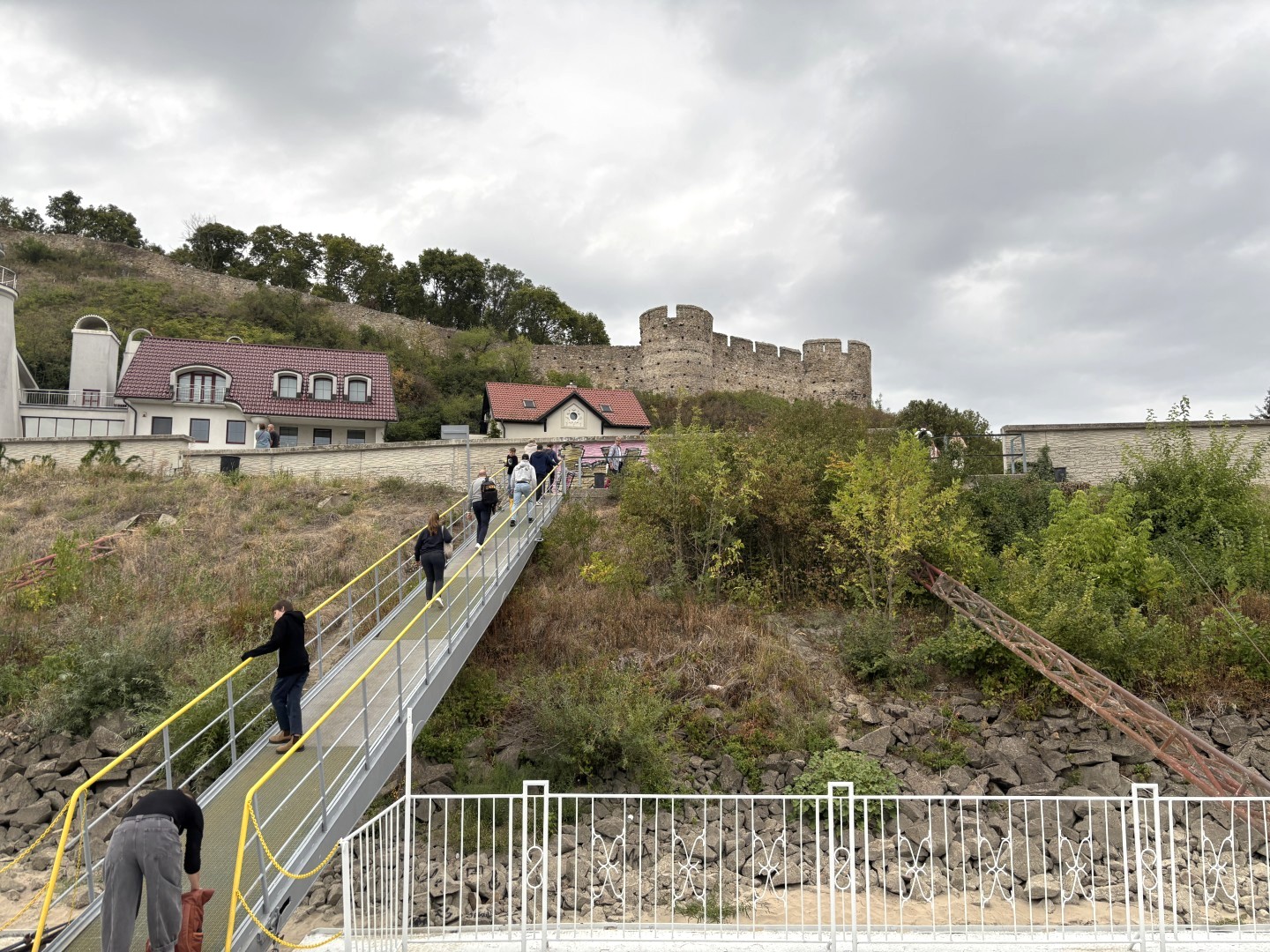
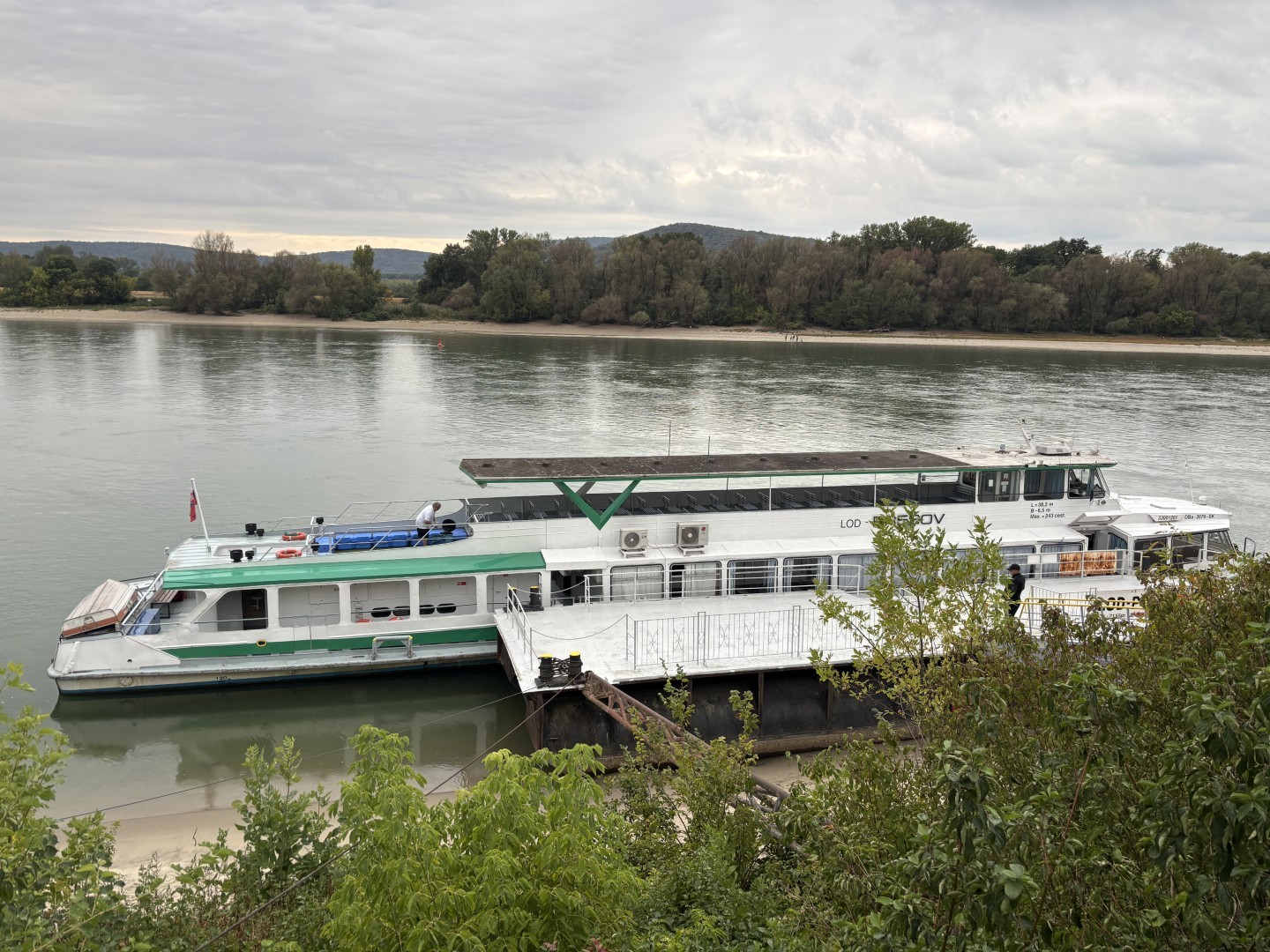
Vanuit Bratislava is het mogelijk om met een boot over de Donau naar Devín Castle te varen. De tocht voert langs de oevers van Bratislava en door een groen rivierlandschap met als bestemming de indrukwekkende kasteelruïne op een hoge rots bij de samenvloeing van de Donau en de Morava. De boot legt aan bij de aanlegplaats van Devín, onderaan het kasteel. Vanaf daar is het ongeveer 15 minuten lopen naar de ingang van het kasteel. Wij hadden gekozen voor de Blue Danube Tours een van de bekendste aanbieders.
From Bratislava, it is possible to take a boat trip along the Danube to Devín Castle. The journey leads along the green banks of Bratislava and through a lush river landscape, with the impressive castle ruins on a high rock at the confluence of the Danube and the Morava as destination. The boat docks at Devín's landing place, at the foot of the castle. From there, it is about a 15-minute walk to the castle entrance. We had chosen Blue Danube Tours, one of the best-known providers.
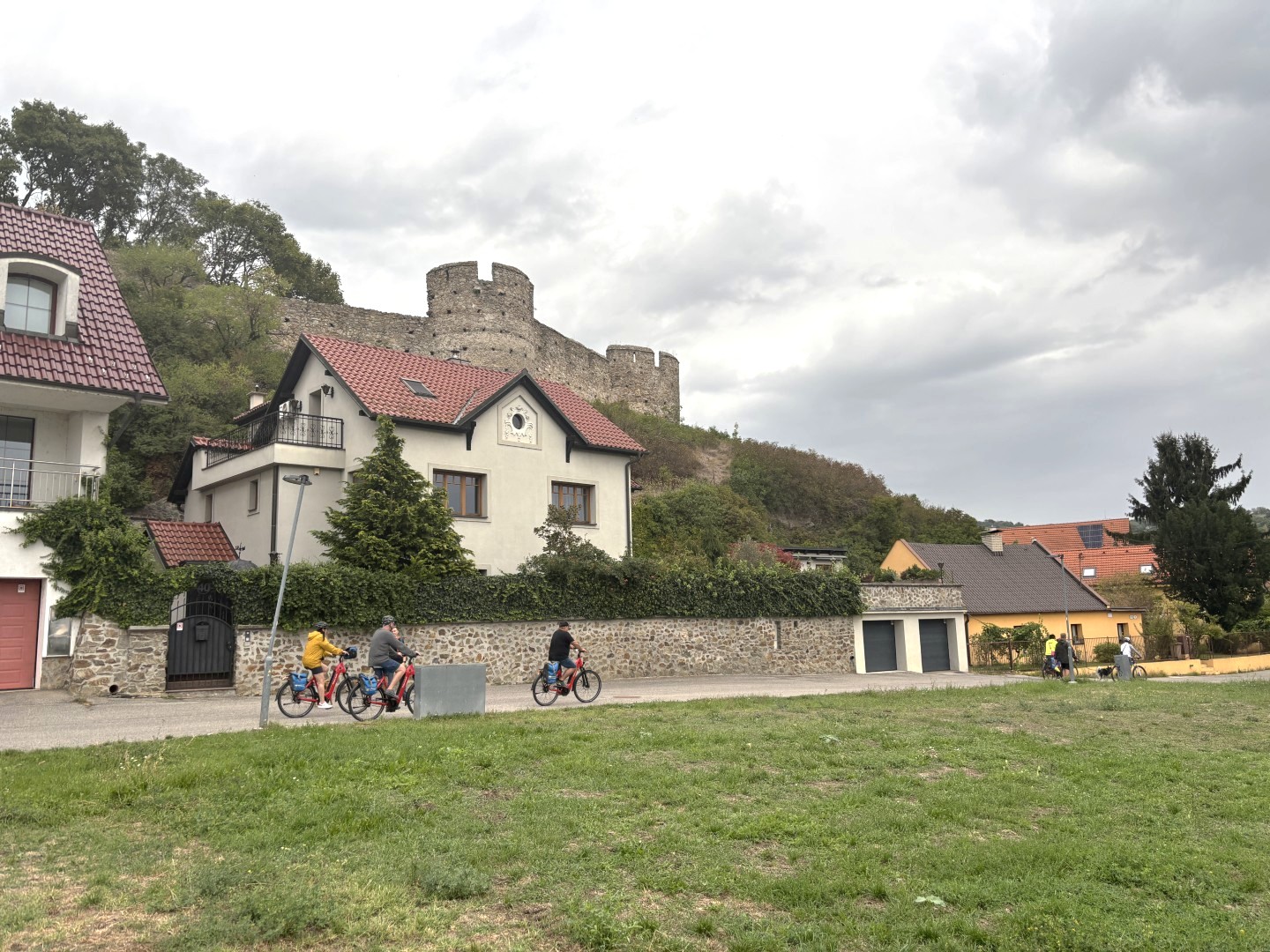
Het plaatsje Devín heeft oude huizen, een dorpskerk en cafés en restaurants waar bezoekers iets kunnen eten of drinken. Je komt dus niet aan in een andere grote stad, maar in het rustige Devín, dat tegenwoordig bij Bratislava hoort.
The town of Devín features old houses, a village church, and cafés and restaurants where visitors can enjoy something to eat or drink. You are not arriving in another large city, but rather in the quiet town of Devín, which is now part of Bratislava.
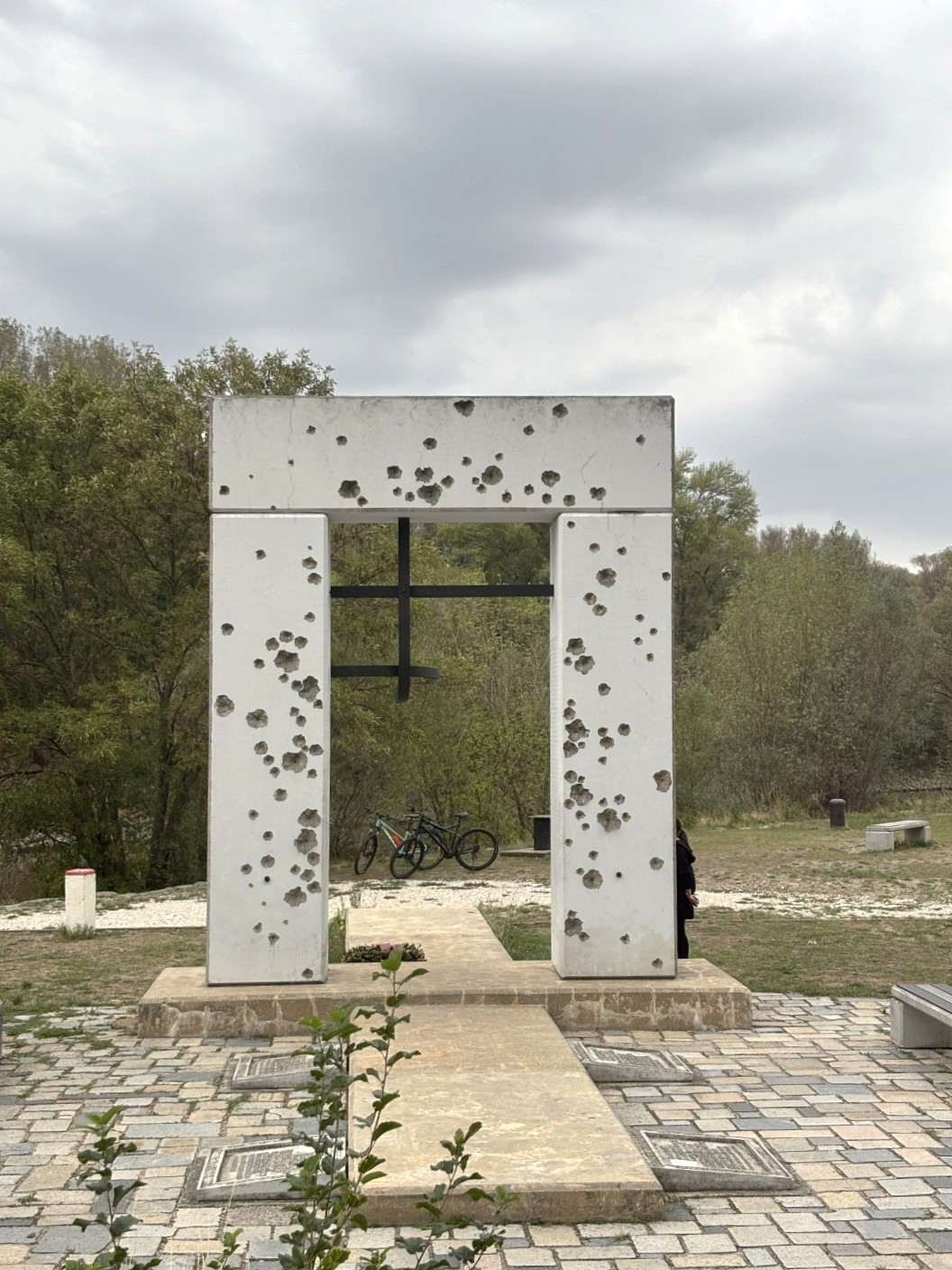
Het wandelpad langs de Donau naar Devín Castle voert langs verschillenden bijzondere plekken. Hier is een herdenkingsplaats, de Gate of Freedom (Brána slobody). Het monument werd op 17 november 2005 onthuld en herdenkt de honderden mensen die tussen 1945 en 1989 bij vluchtpogingen om het leven kwamen. De gaten in de witte stenen constructie lijken op kogelgaten , maar ze zijn opzettelijk aangebracht als symbool.
The walking path along the Danube to Devín Castle passes various special places. One of these is a memorial known as the Gate of Freedom (Brána slobody). Unveiled on November 17, 2005, the monument commemorates the hundreds of people who lost their lives while attempting to flee between 1945 and 1989. The holes in the white stone structure resemble bullet holes, but they were intentionally placed as a symbol.
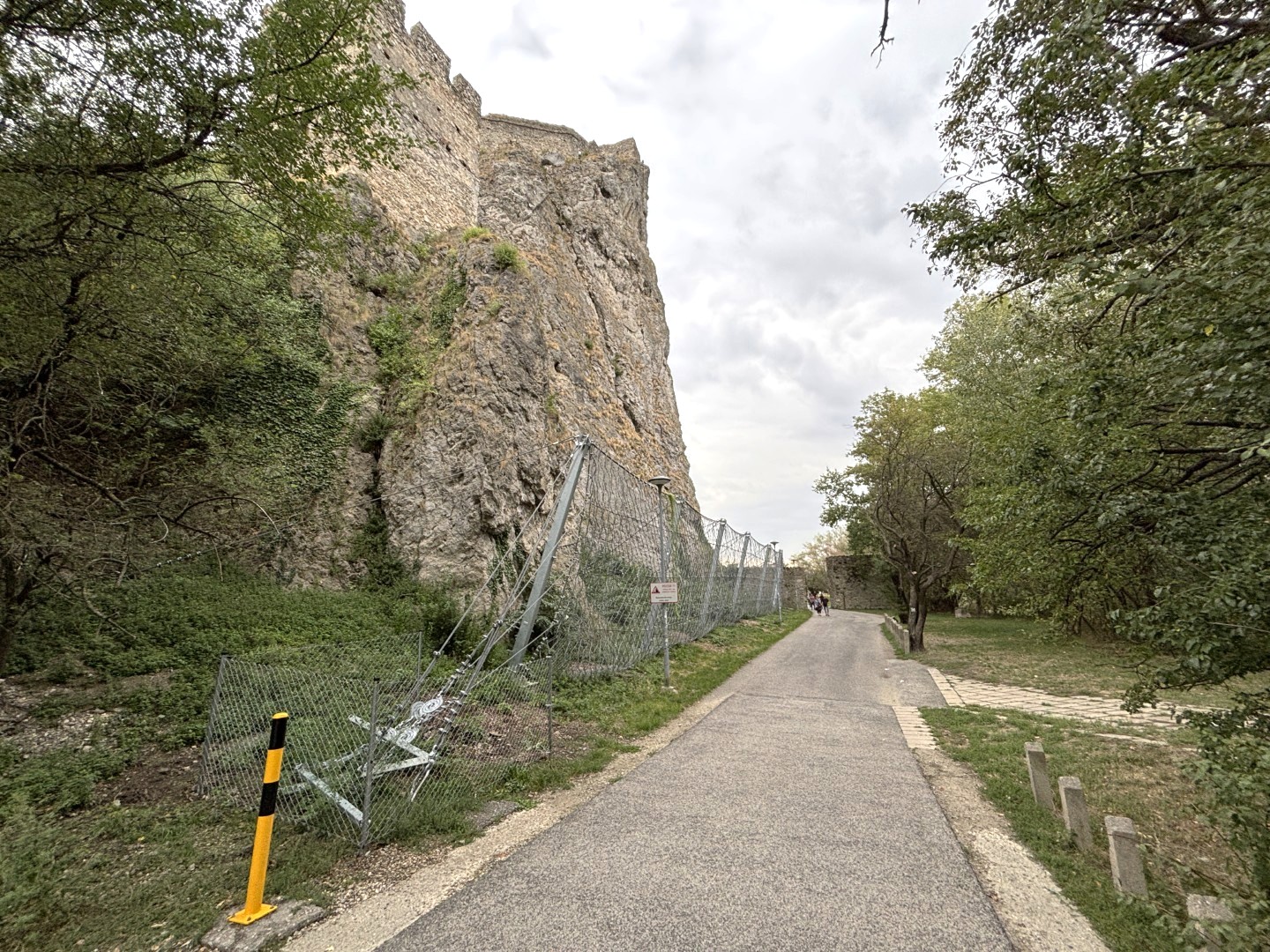
De route langs de rivier combineert natuur, indrukwekkende uitzochten en geschiedenis. Bij Devín wandel je niet alleen langs een middeleeuws kasteel, maar ook langs een voormalige grens van het IJzeren Gordijn. Daardoor vertelt deze korte wandeling zowel het verhaal van de verre geschiedenis als dat van de recente Europese geschiedenis.
The route along the river combines nature, impressive views, and history. At Devín, you walk not only past a medieval castle but also along a former section of the Iron Curtain. As a result, this short hike tells the story of both the distant past and more recent European history.
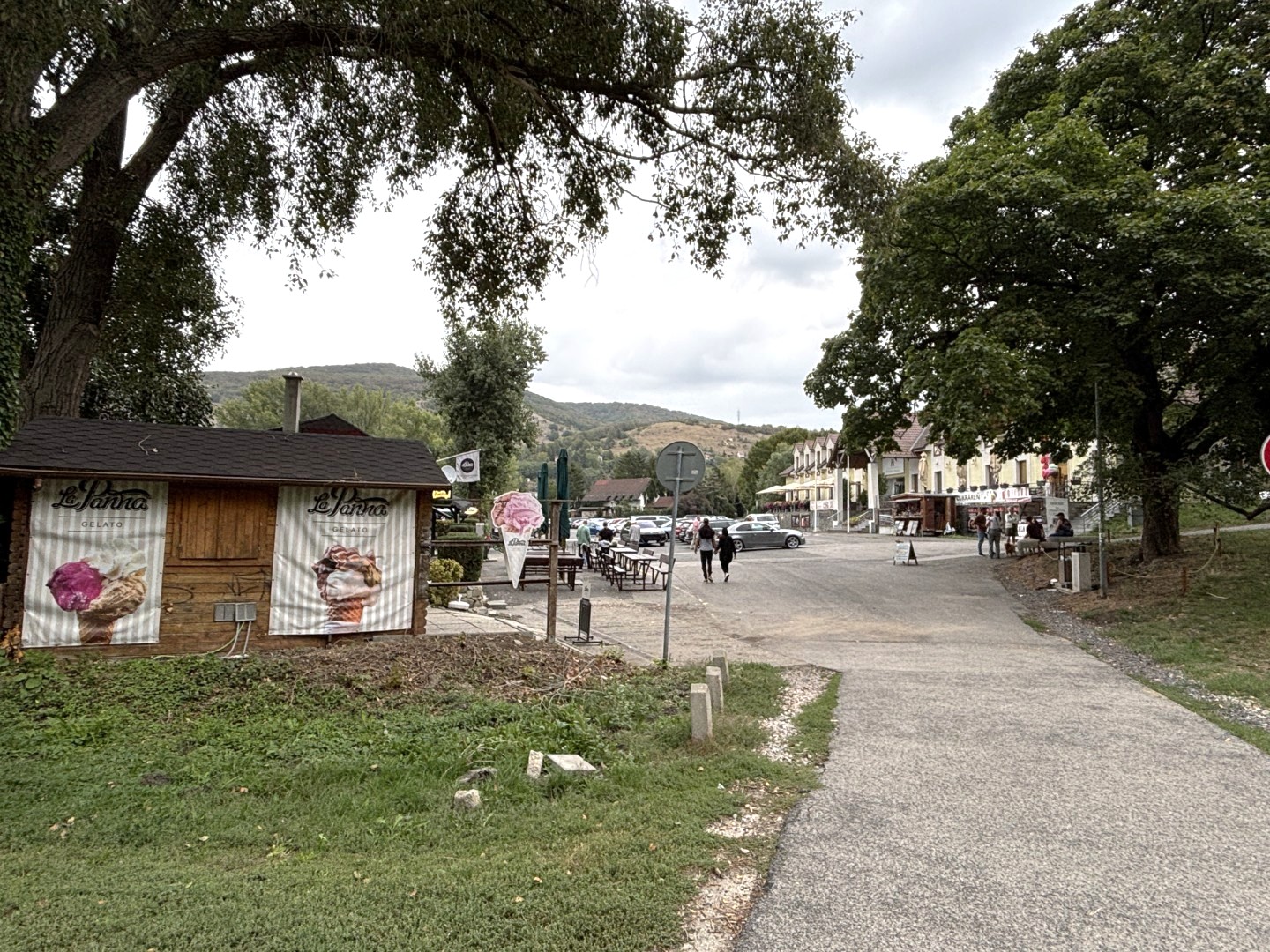
Voor de ingang van Devín Castle ligt een grote parkeerplaats, met daarnaast Hotel Hradná brána en een ijskraam. Deze voorzieningen maken het een aangename plek voor bezoekers om even te pauzeren voordat ze het kasteel bezoeken.
In front of the entrance to Devín Castle lies a large parking lot, next to Hotel Hradná brána and an ice cream stand. These facilities make it a pleasant place for visitors to take a break before visiting the castle.
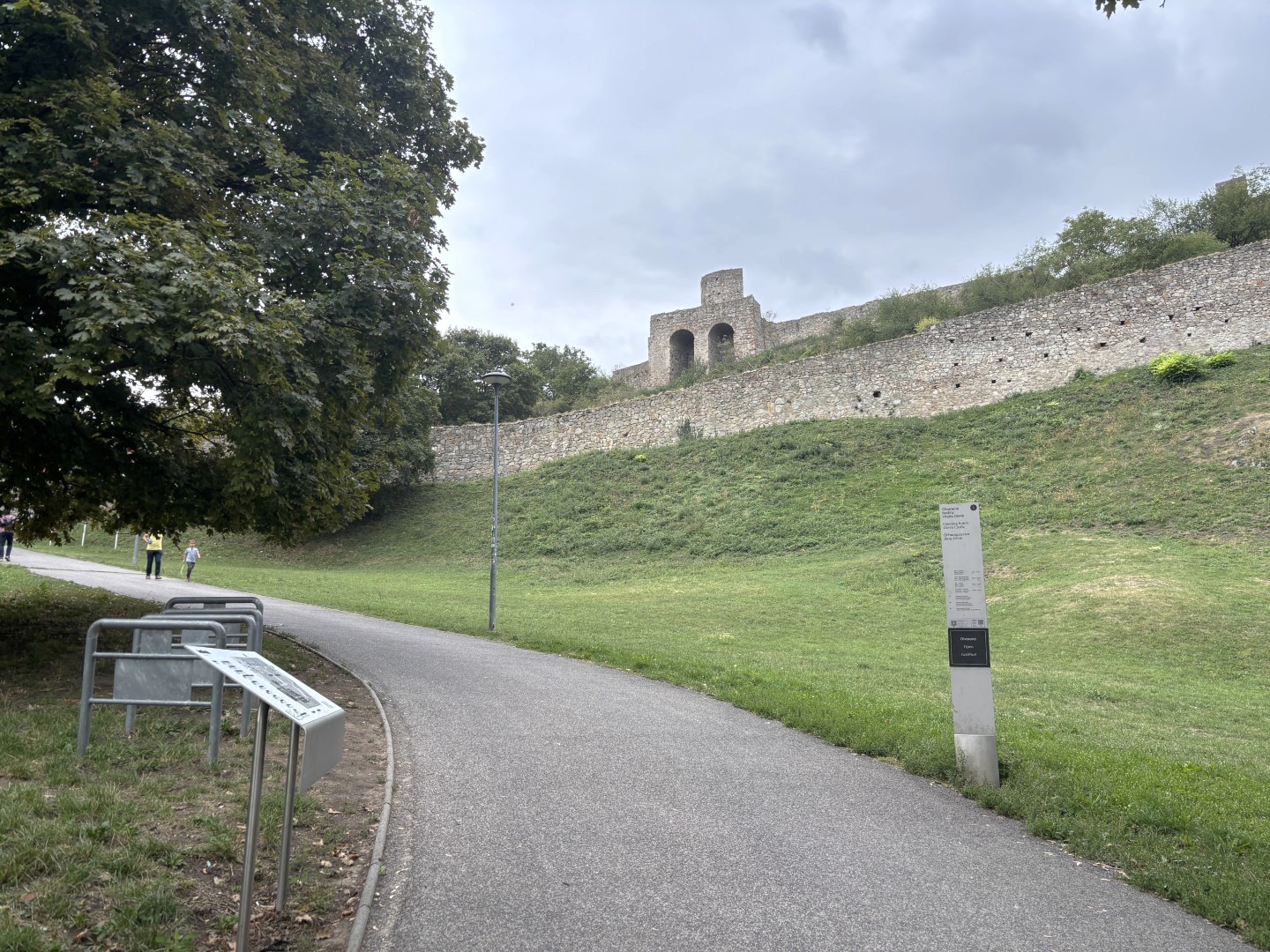
De ingang van Devin Castle ligt boven de parkeerplaats en de toegang tot de ruïne loopt via een historische stenen poort.
The entrance to Devin Castle is located above the parking area, and access to the ruins is via a historic stone gate.
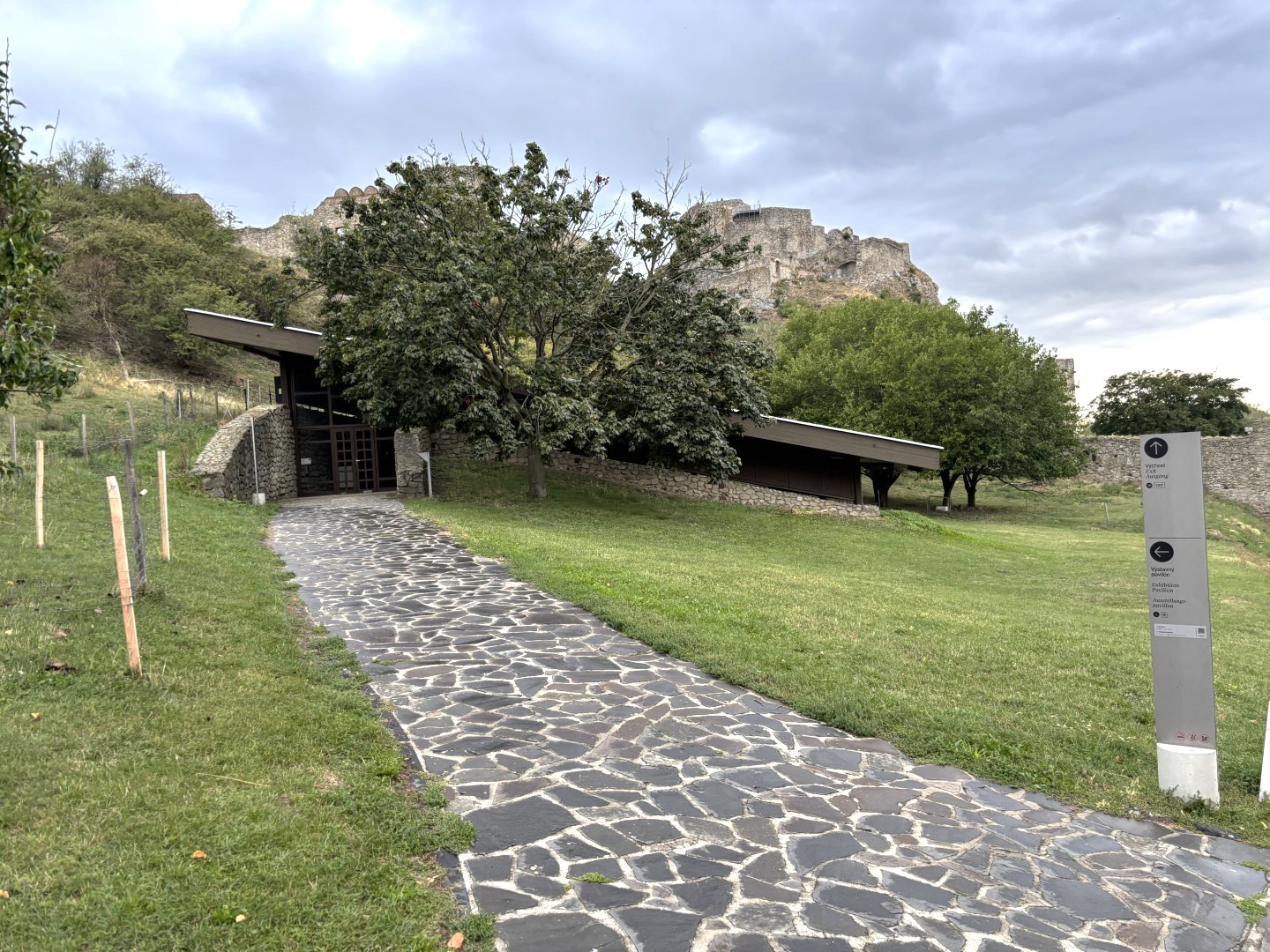
Vlakbij de ingang aan je rechterkant staat het vroegchristelijke kapel op kasteel Devín (Ranokrest'anská kapInka na hrade Devín). Het is een van de bijzonderste archeologische ontdekkingen op het kasteelterrein. Het gaat om de overblijfselen van een klein gebouw dat mogelijk al uit de 4e eeuw na Christus dateert. Archeologen vonden een ijzeren beslag in de vorm van een kruis. Dat zou kunnen wijzen op een christelijke functie.
Near the entrance, on your right, stands the early Christian chapel at Devín Castle (Ranokrest'anská kaplnka na hrade Devín). It is one of the most remarkable archaeological discoveries on the castle grounds. It consists of the remains of a small building that may date as far back as the 4th century AD. Archaeologists found an iron fitting in the shape of a cross. This could indicate a Christian function.
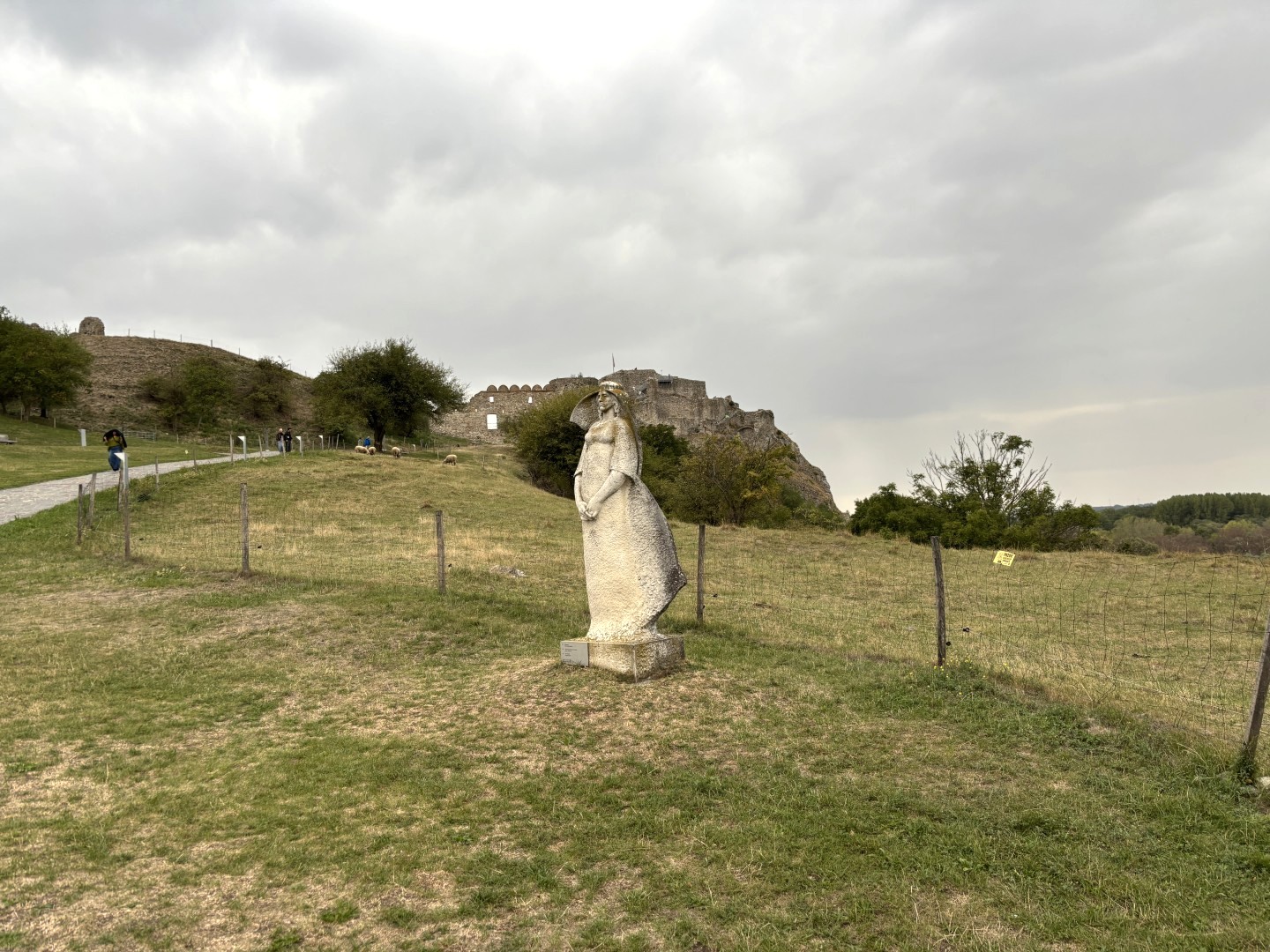
Verderop staat het beeld van De Slavische Vrouw. Het beeld herinnert aan de Slavische geschiedenis en cultuur van Slowakije en past bij de bijzondere historische betekenis van Kasteel Devín.
Further on stands the statue of The Slavic Woman. The statue is a reminder of the Slavic history and culture of Slovakia and fits in with the special historical significance of Devín Castle.
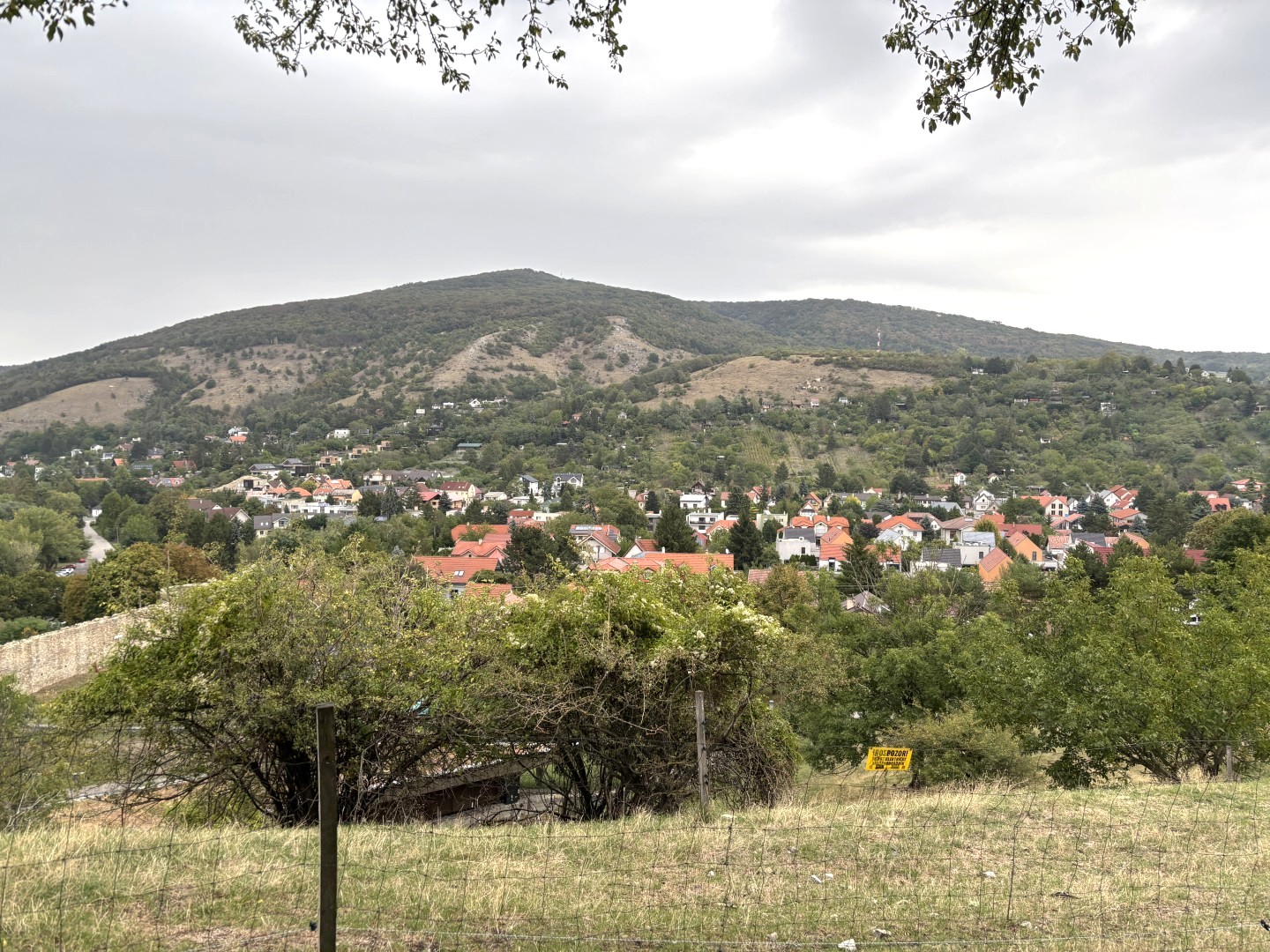
Vanaf het beeld kun je een stukje verder lopen en kom je bij mooie uitzichtpunten. Een mooi moment om even stil te staan. Je kijkt daar uit over het landschap waar duizenden jaren geleden Kelten, Romeinen en Slaven leefden.
From the statue, you can walk a little further to reach some beautiful viewpoints—a perfect moment to pause for a while. From there, you look out over the landscape where Celts, Romans, and Slavs lived thousands of years ago.
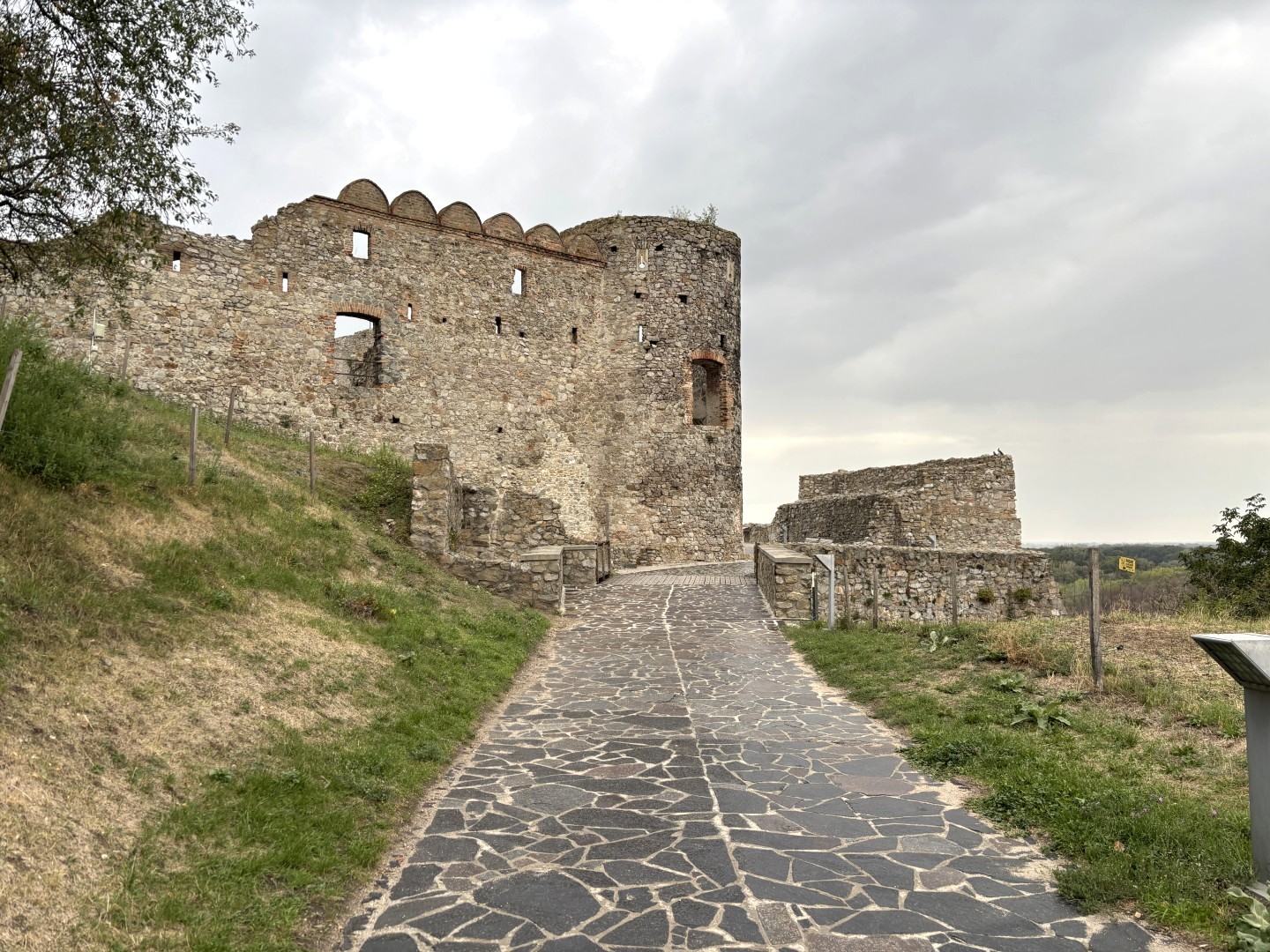
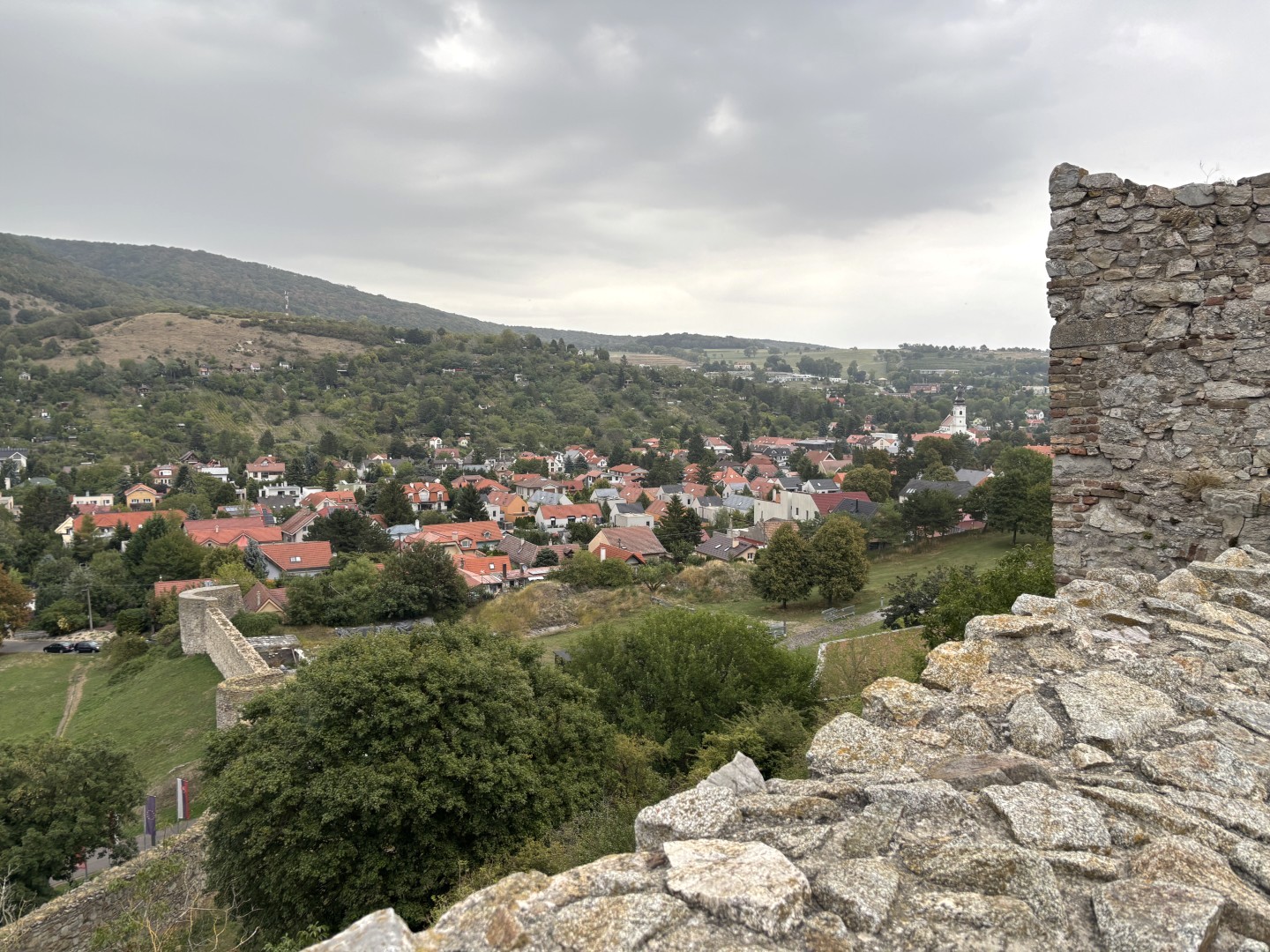
Uiteindelijk kom je aan bij het midden kasteel. Kasteel Devín heeft een geschiedenis van duizenden jaren. Al rond 5000 jaar vóór Christus woonden er mensen op deze hoge rots, omdat de plek bescherming bood en uitzicht gaf over de omgeving (zie film).
Eventually, you arrive at the middle castle. Devín Castle has a history of thousands of years. As early as 5000 BC, people lived on this high rock, as the location offered protection and a view over the surrounding area (see film).
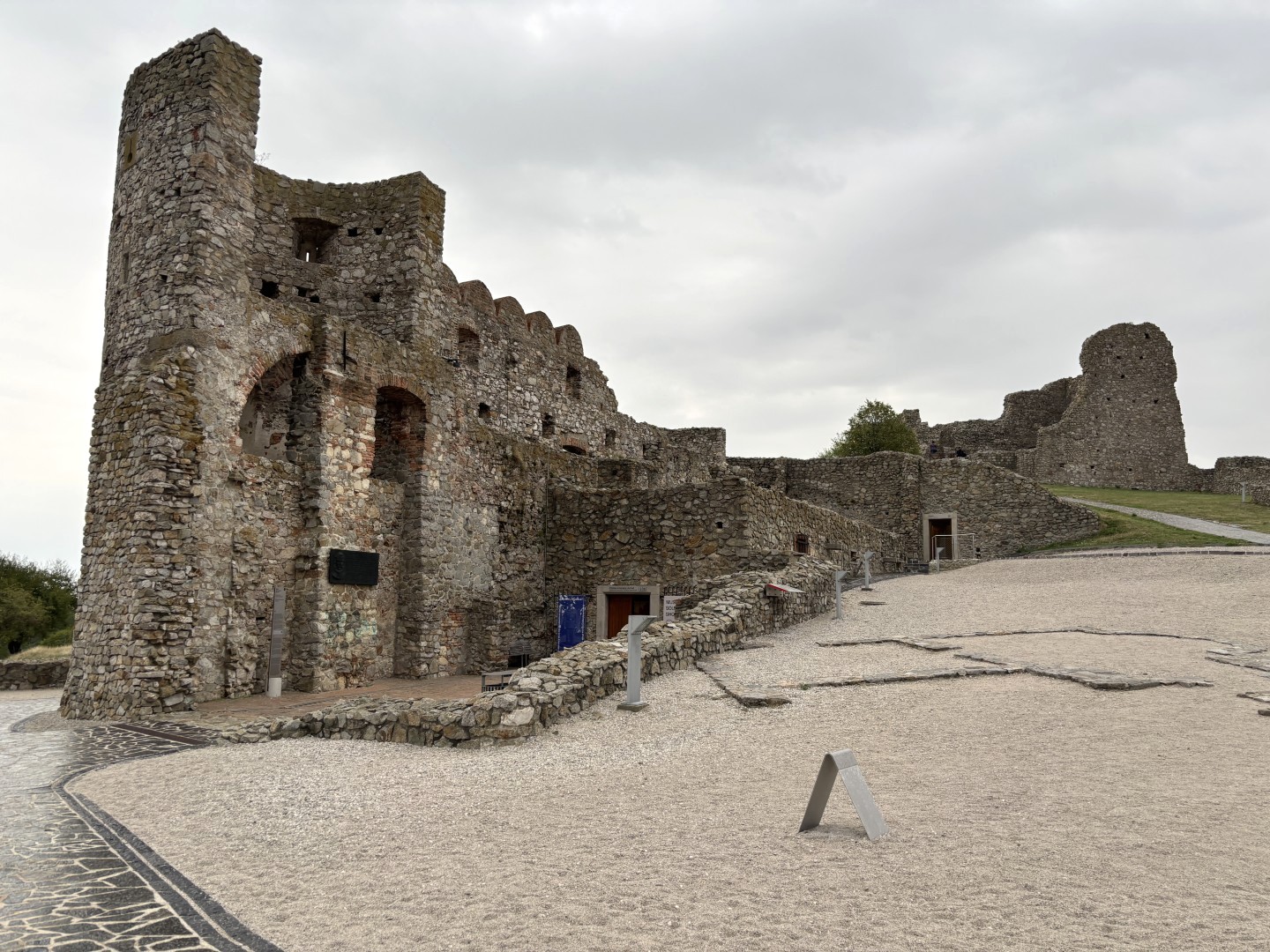
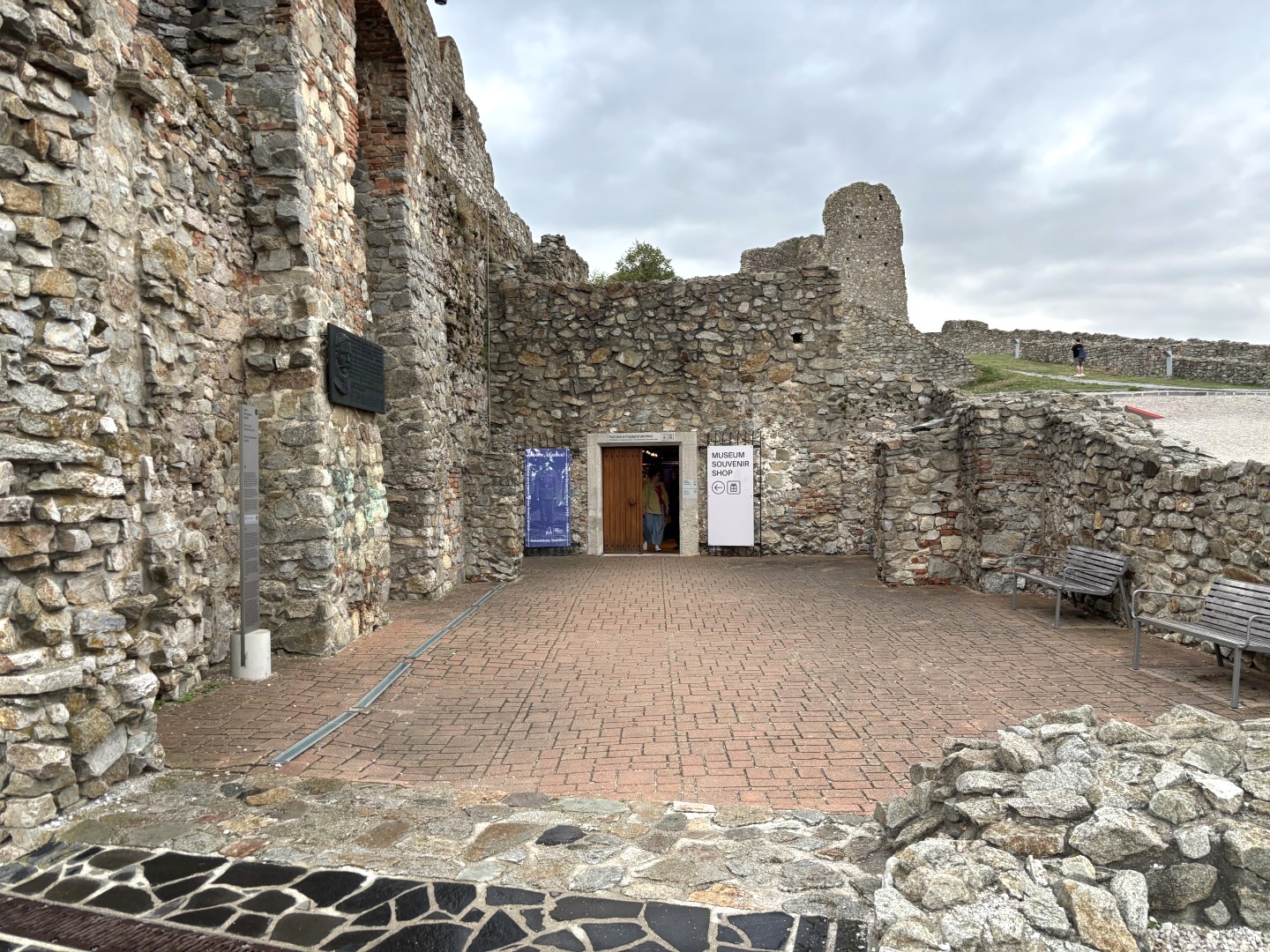
Het middelkasteel was vroeger ook het belangrijkste woon en leefgedeelte van het kasteel.
In the past, the central castle was also the primary living and residential area.
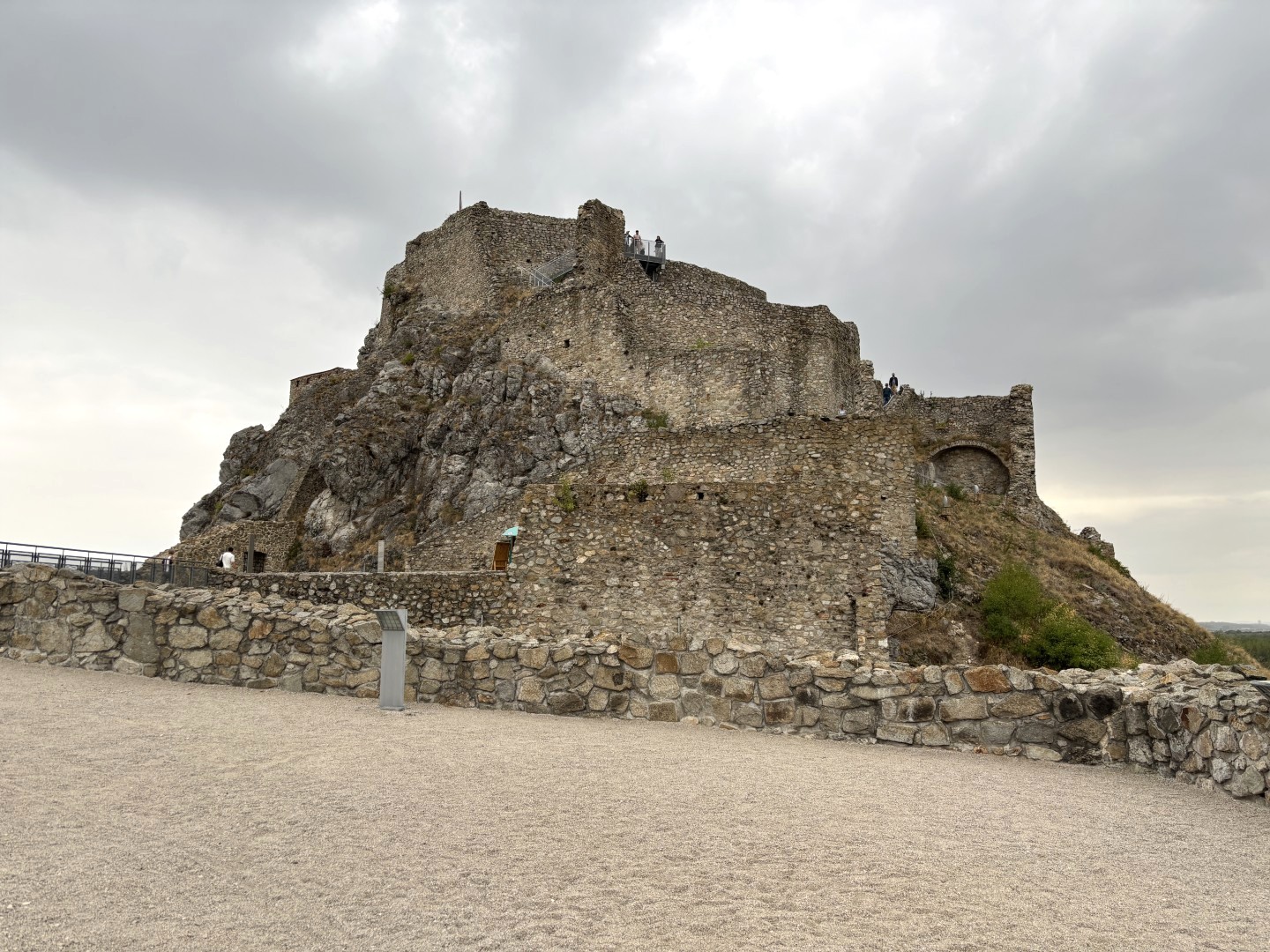
Hier woonden adellijke families, werden dagelijkse werkzaamheden uitgevoerd en hier bevonden zich belangrijke voorzieningen.
Noble families lived here, daily tasks were carried out, and important facilities were located here.
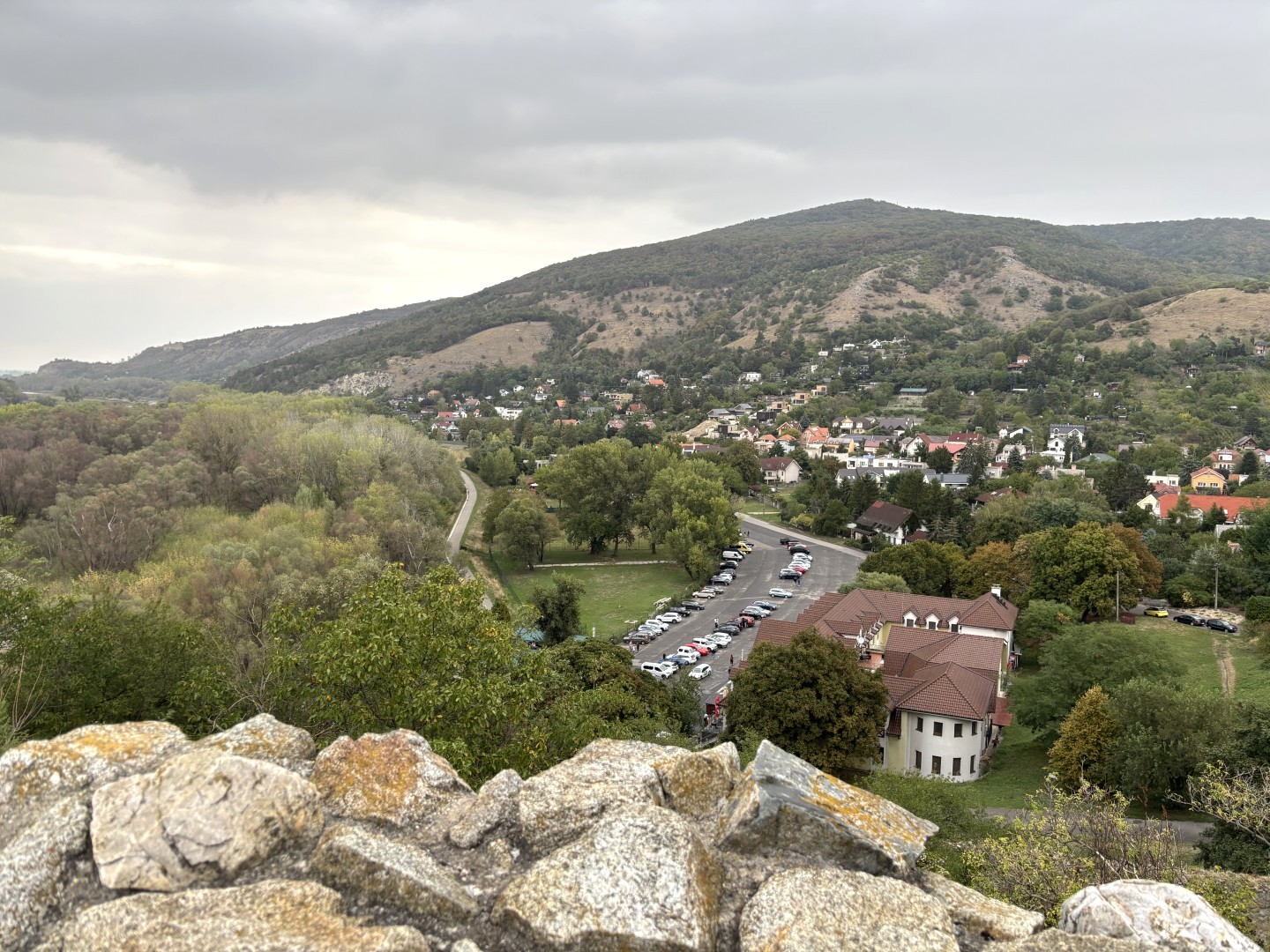
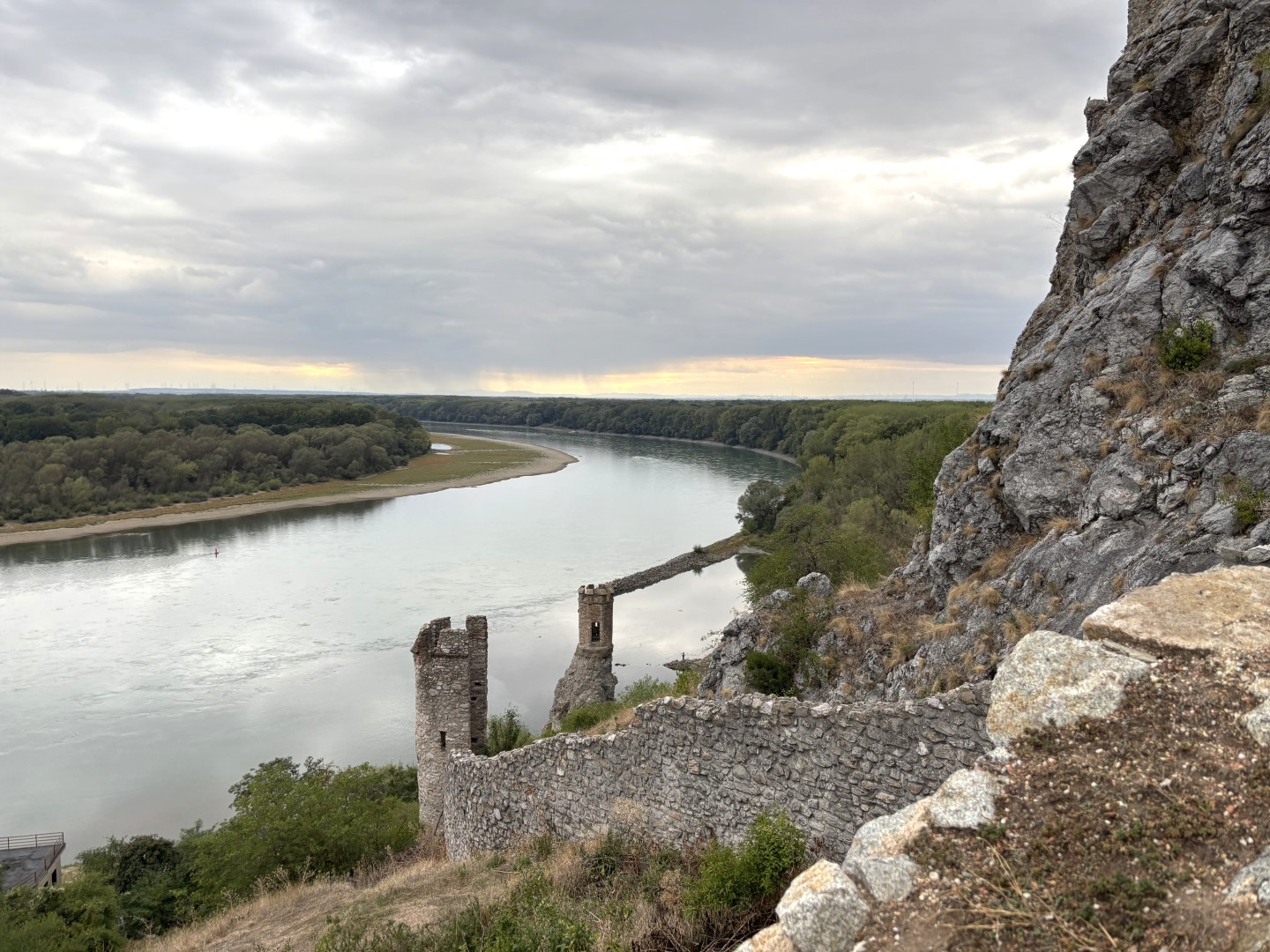
Vanaf het kasteel keek men uit over twee rivieren. De Donau en de Morava. Op dit punt komen beide rivieren samen. Aan de overkant ligt Oostenrijk, dit was vroeger een bijzonder belangrijke strategische grenslocatie.
From the castle, they looked out over two rivers: the Danube and the Morava. At this point, both rivers meet. On the other side lies Austria; this was once a highly significant strategic border location.
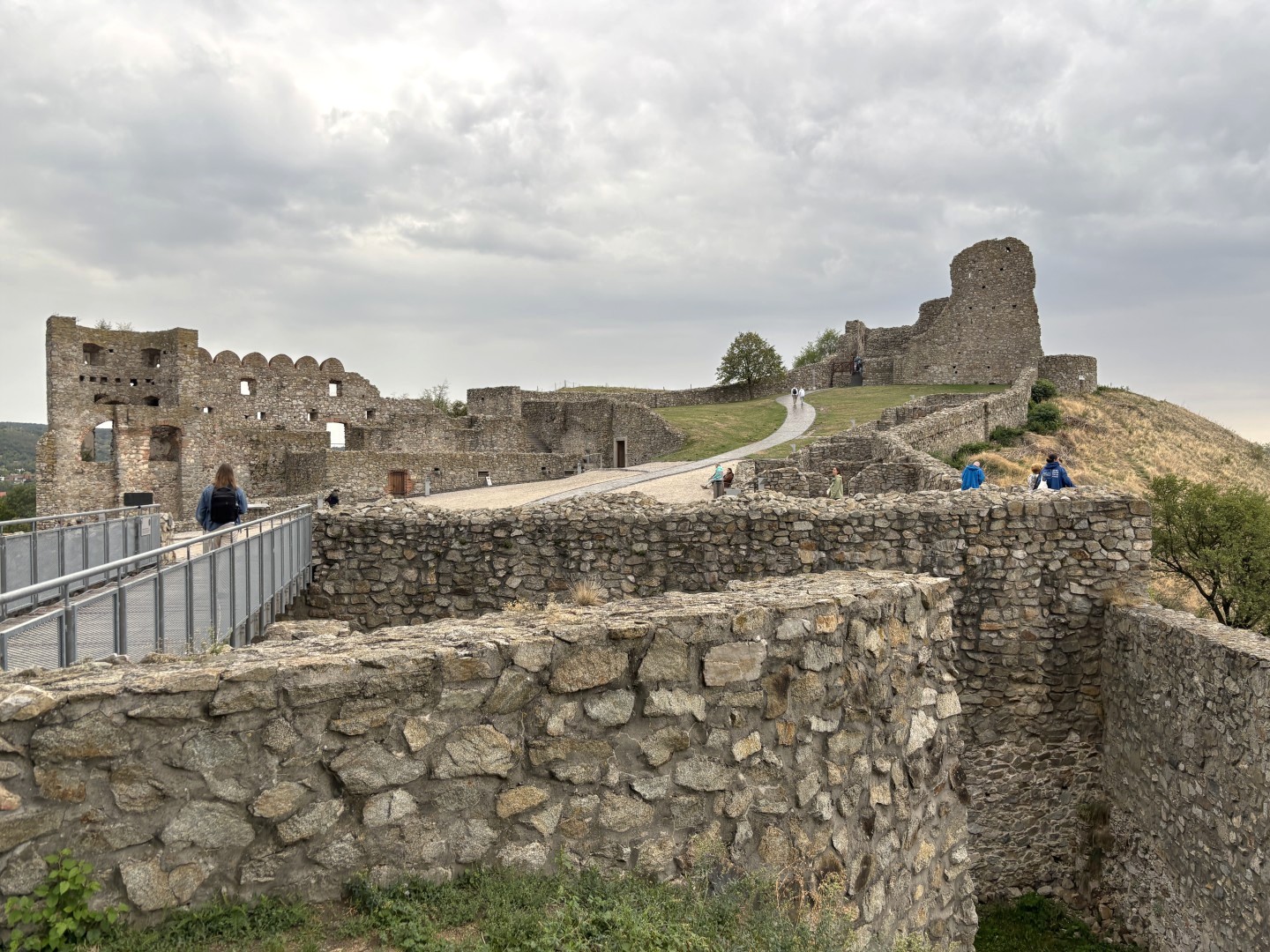
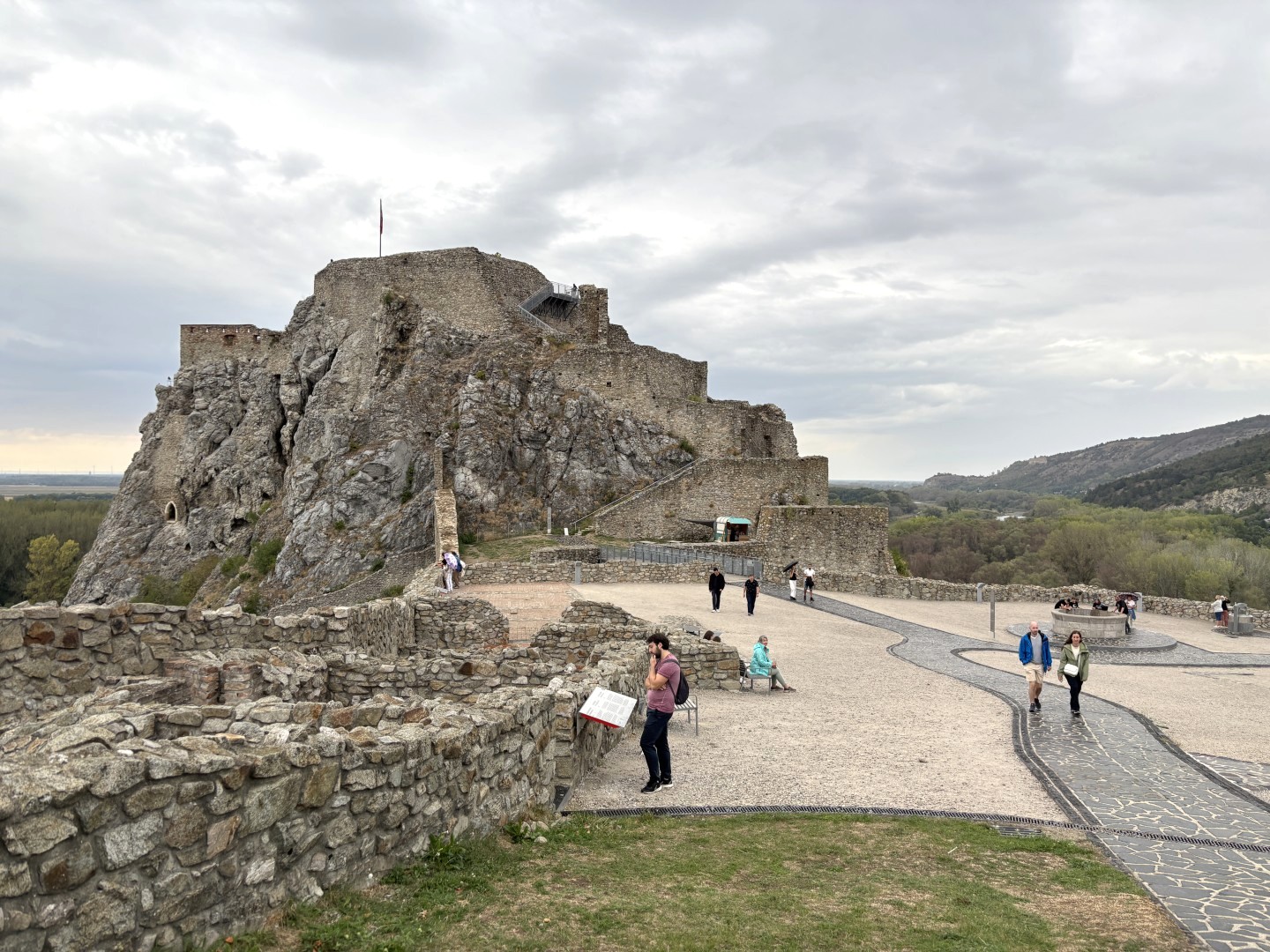
In de 15e eeuw werd de bovenburcht opnieuw ingericht door de familie Garay. Er kwam een groter woongebouw met verschillende kamers, een kleine binnenplaats, ruimtes voor de kasteelheer en zijn personeel en een regenwaterreservoir. Dit was dus niet alleen een militaire plek, maar ook een woonplaats (zie film).
In the 15th century, the upper castle was redesigned by the Garay family. A larger residential building was constructed with various rooms, a small courtyard, quarters for the lord of the castle and his staff, and a rainwater reservoir. So this was not only a military site, but also a residential area (see film).
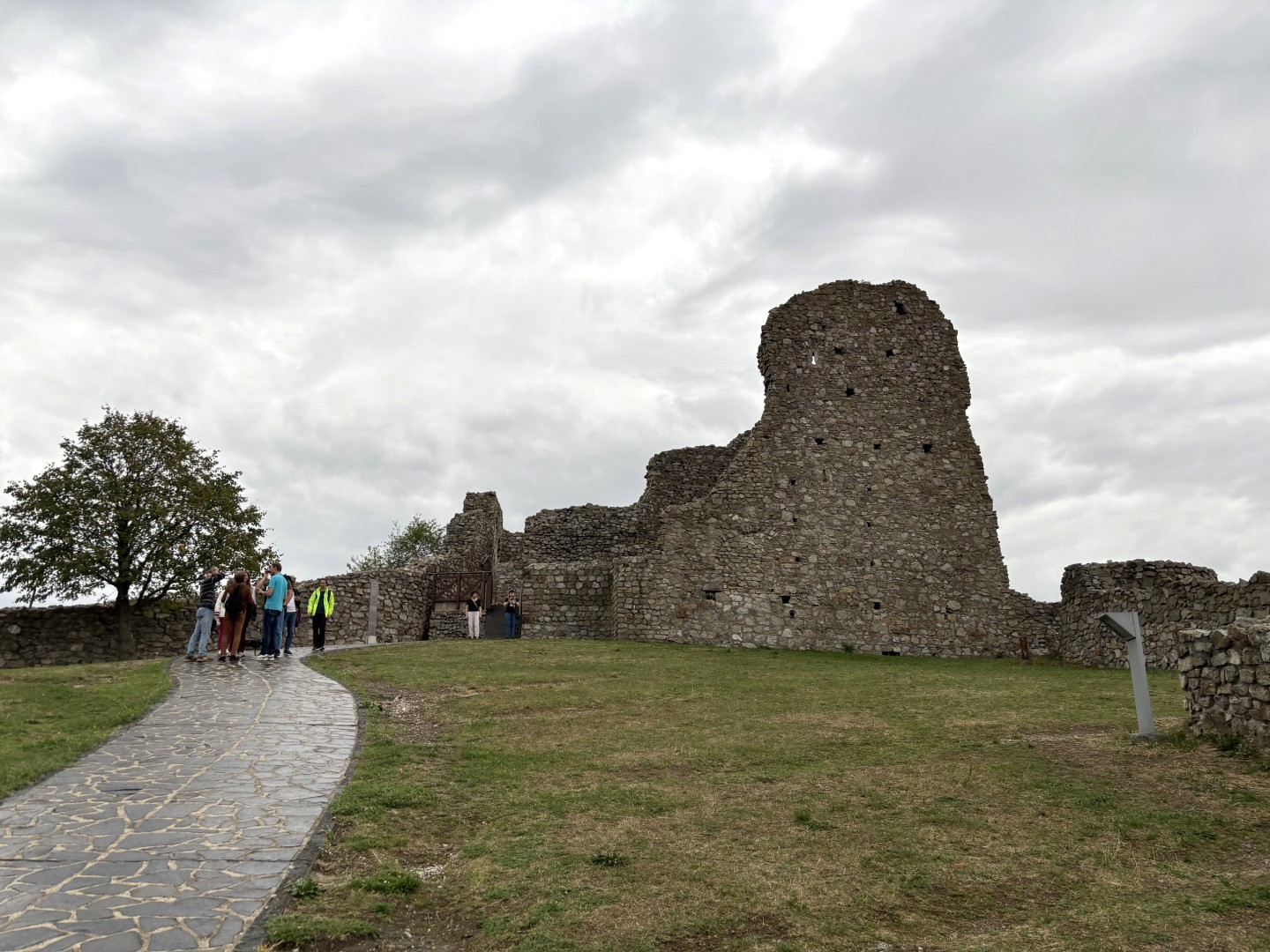
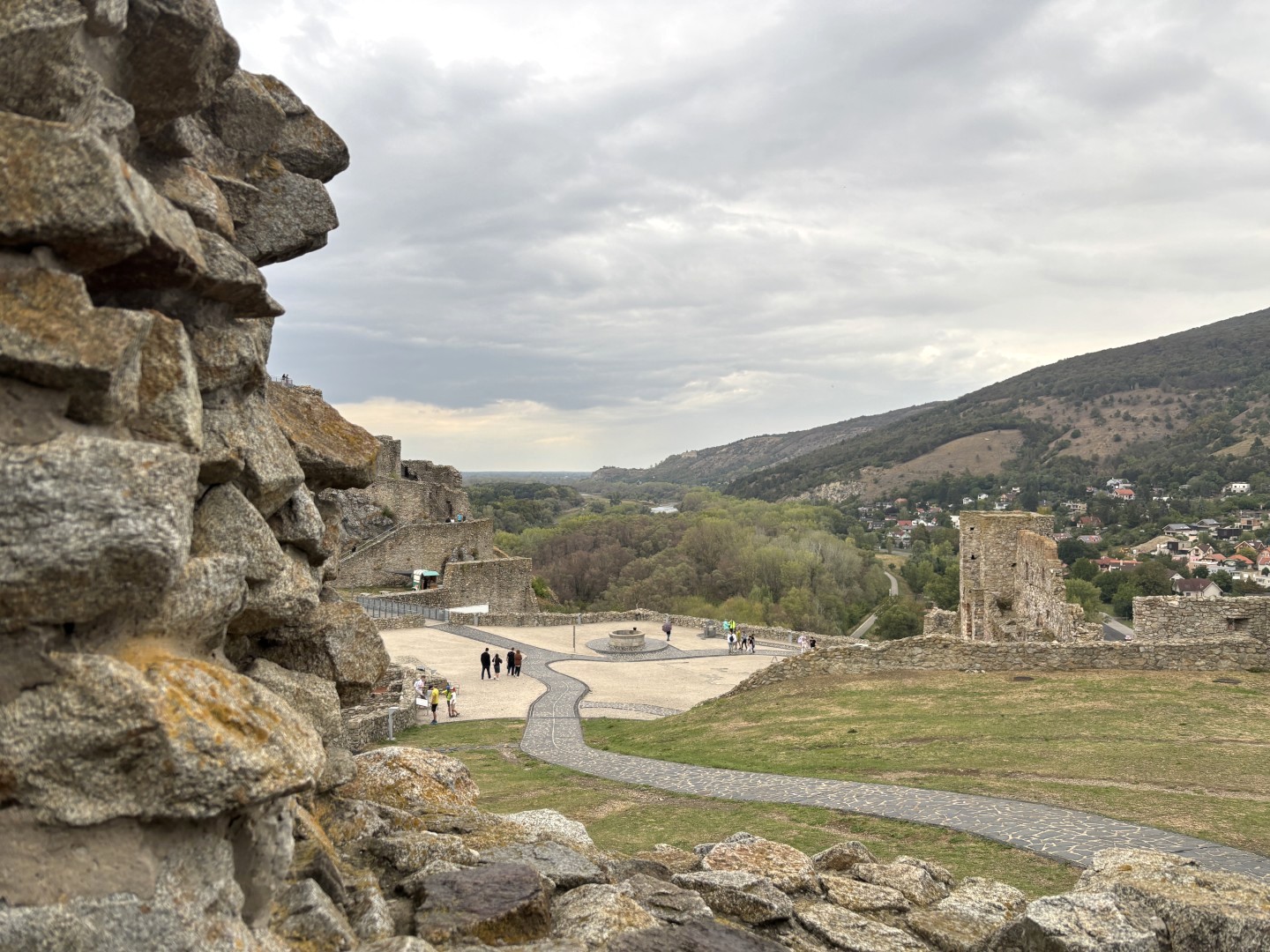
De waterput in het middenkasteel is een bijzonder bouwwerk. De waterput werd in de 15e eeuw aangelegd, tijdens de periode waarin de adellijke familie Garay de burcht uitbreidde en versterkte. De belangrijkste reden was de watervoorziening. Een burcht moest tijdens een belegering immers voldoende drinkwater hebben om te kunnen overleven. Voor de aanleg van deze put was men voornamelijk afhankelijk van een regenwaterreservoir in het hoger gelegen kasteelgedeelte.
The well in the middle section of the castle is a remarkable structure. The well was constructed in the 15th century, during the period when the noble Garay family expanded and fortified the castle. Its primary purpose was to provide a water supply; after all, a fortress needed an adequate stock of drinking water to survive a siege. For the creation of this well, the builders relied largely on a rainwater reservoir located in the higher part of the castle complex.
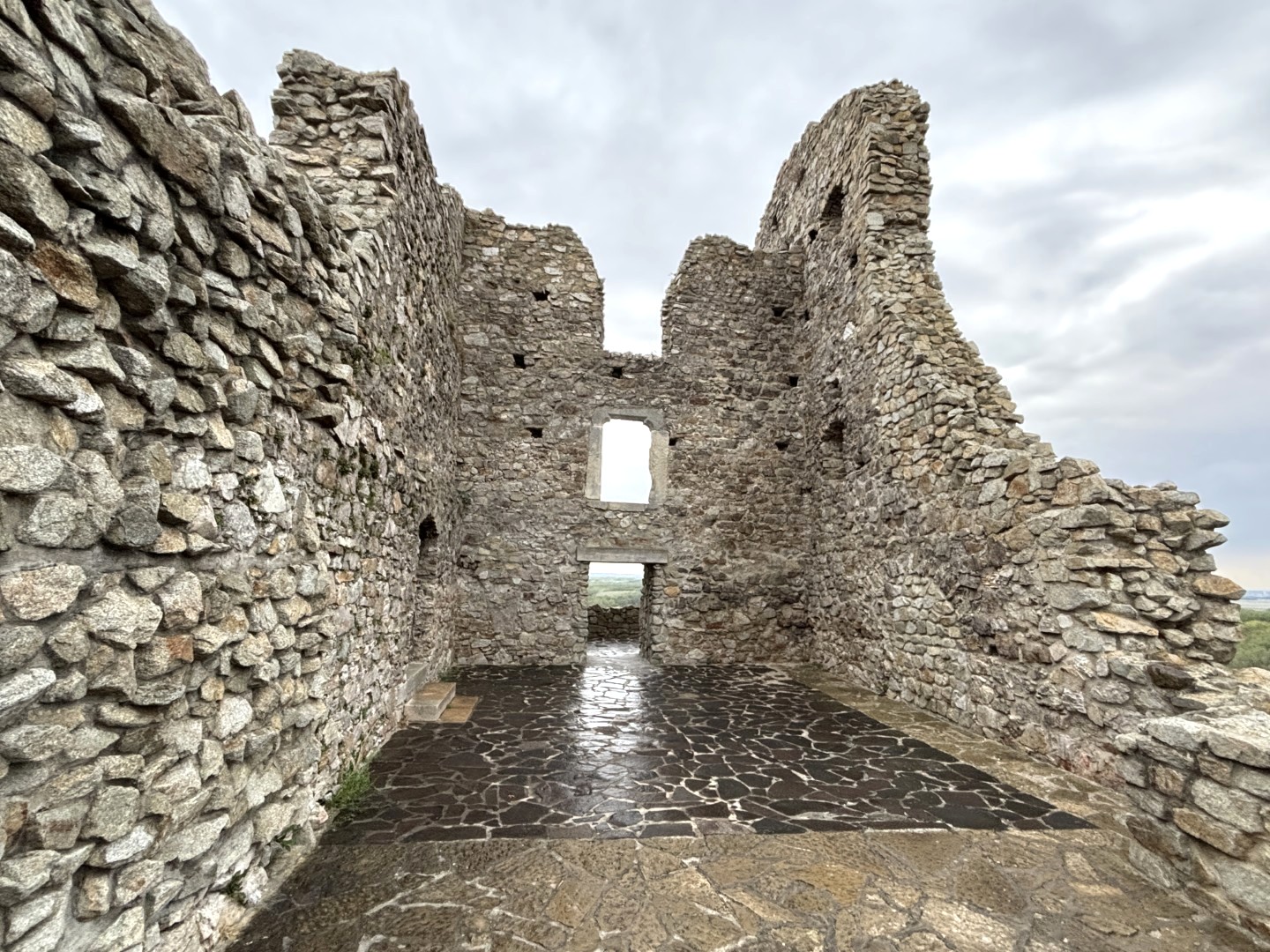
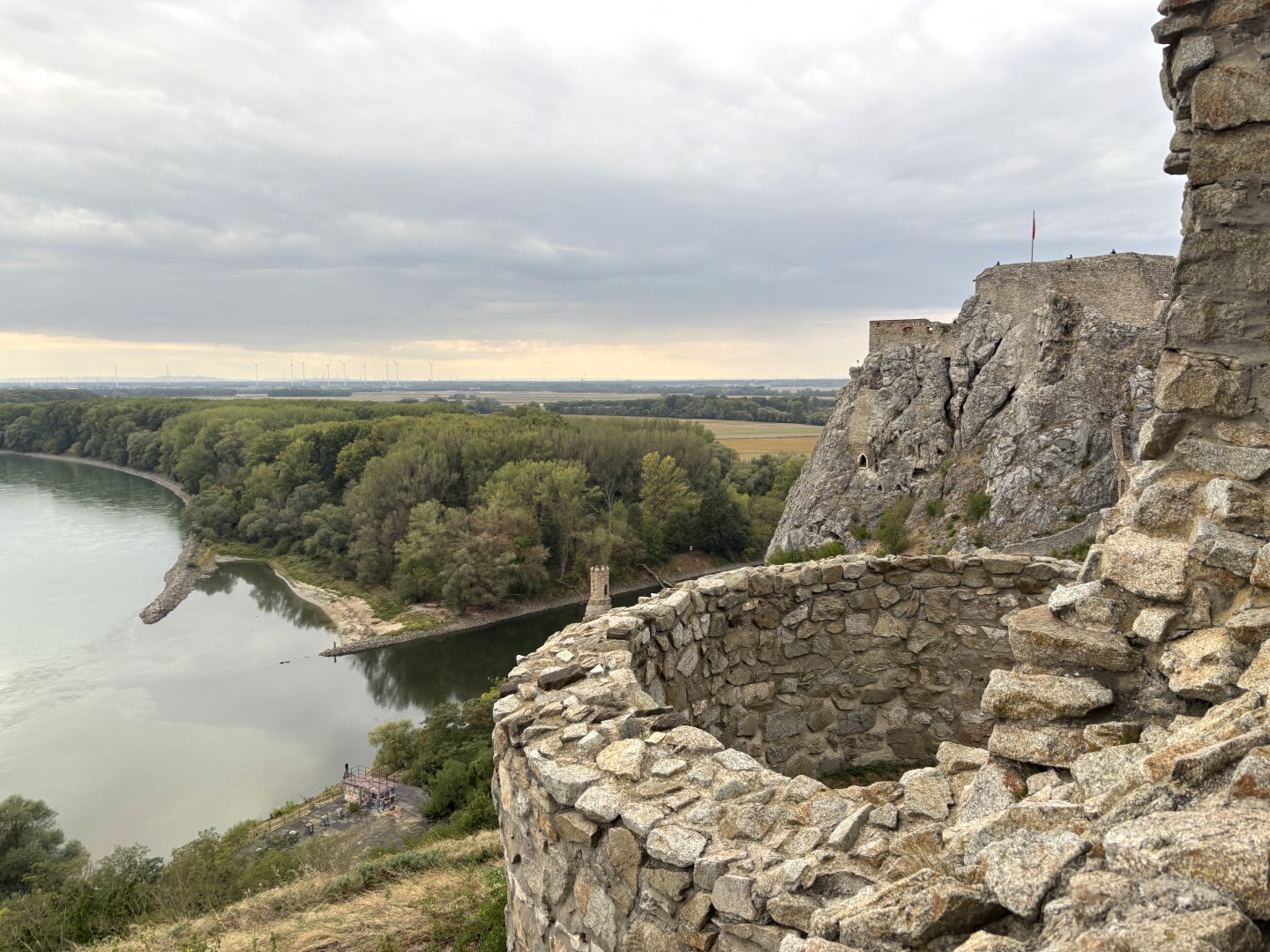
Het was dus geen toeval dat er zoveel uitzicht was op de Donau. De Donau was een belangrijke handels en verkeersroute. Vanaf het kasteel kon men de scheepvaart observeren. De vijandelijke bewegingen vanuit het westen signaleren en de toegangswegen vanuit Oostenrijk bewaken.
So it was no coincidence that there was such a large view of the Danube. The Danube served as a vital trade and transport route. From the castle, one could observe river traffic, spot enemy movements approaching from the west, and monitor the access routes from Austria.
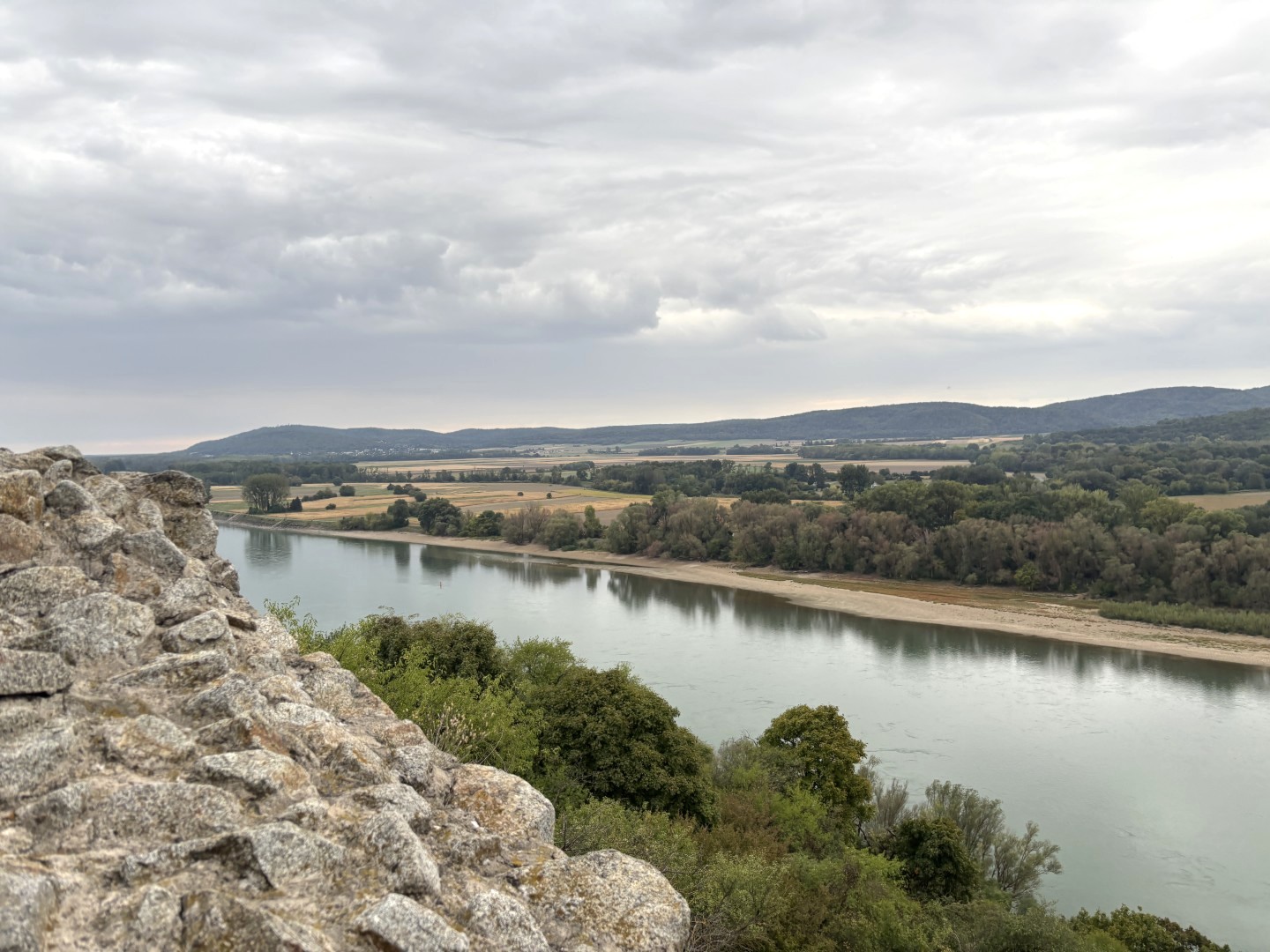
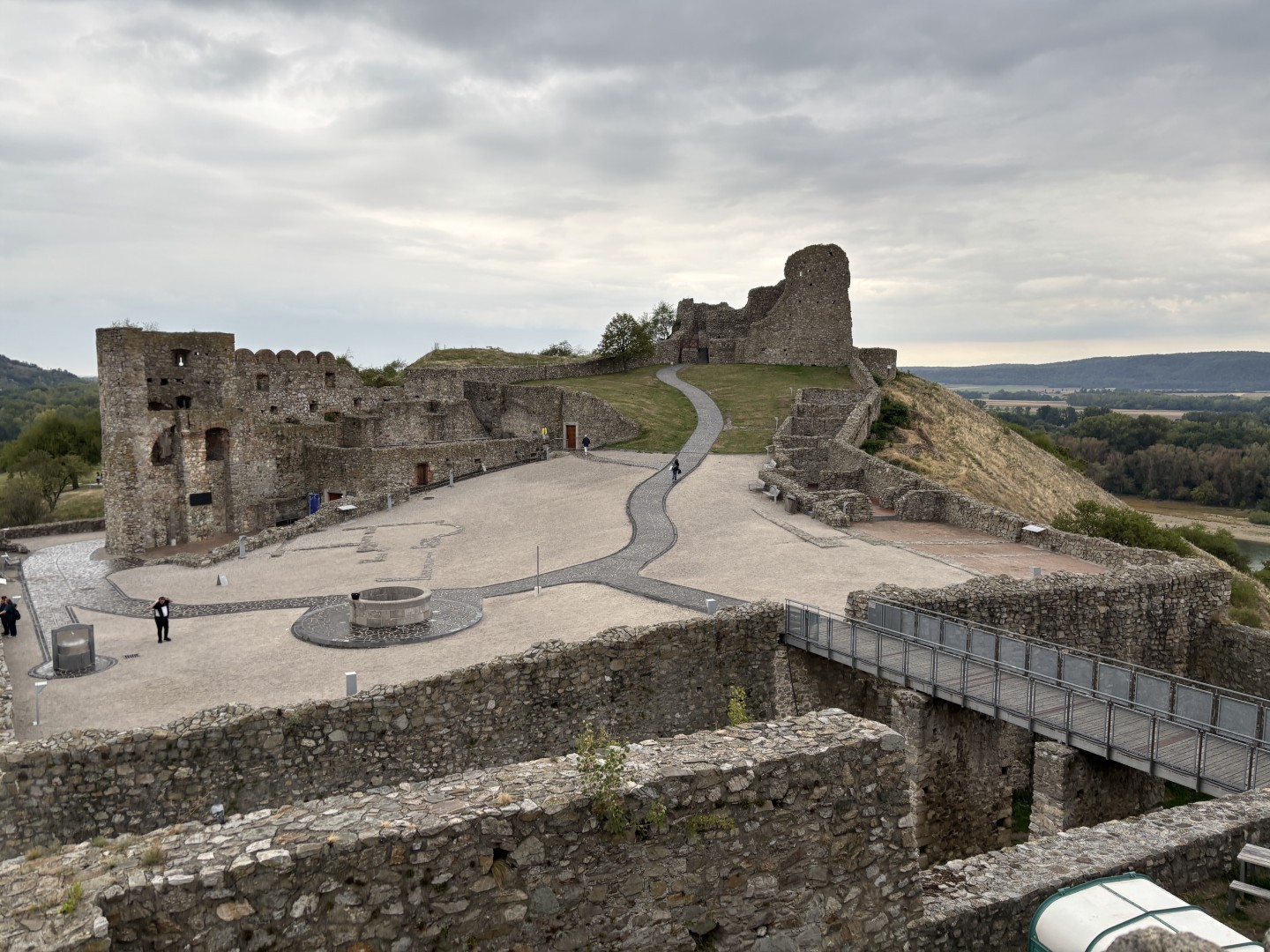
Het Upper Castle is eigenlijk het meest bijzondere en oudste middeleeuwse gedeelte van het hele kasteelcomplex. Het staat boven op de smalle, hoge rots die uitkijkt over de samenvloeiïng van de Donau en de Morava.
The Upper Castle is, in fact, the most remarkable and oldest medieval part of the entire castle complex. It stands atop a narrow, high rock overlooking the confluence of the Danube and the Morava rivers.
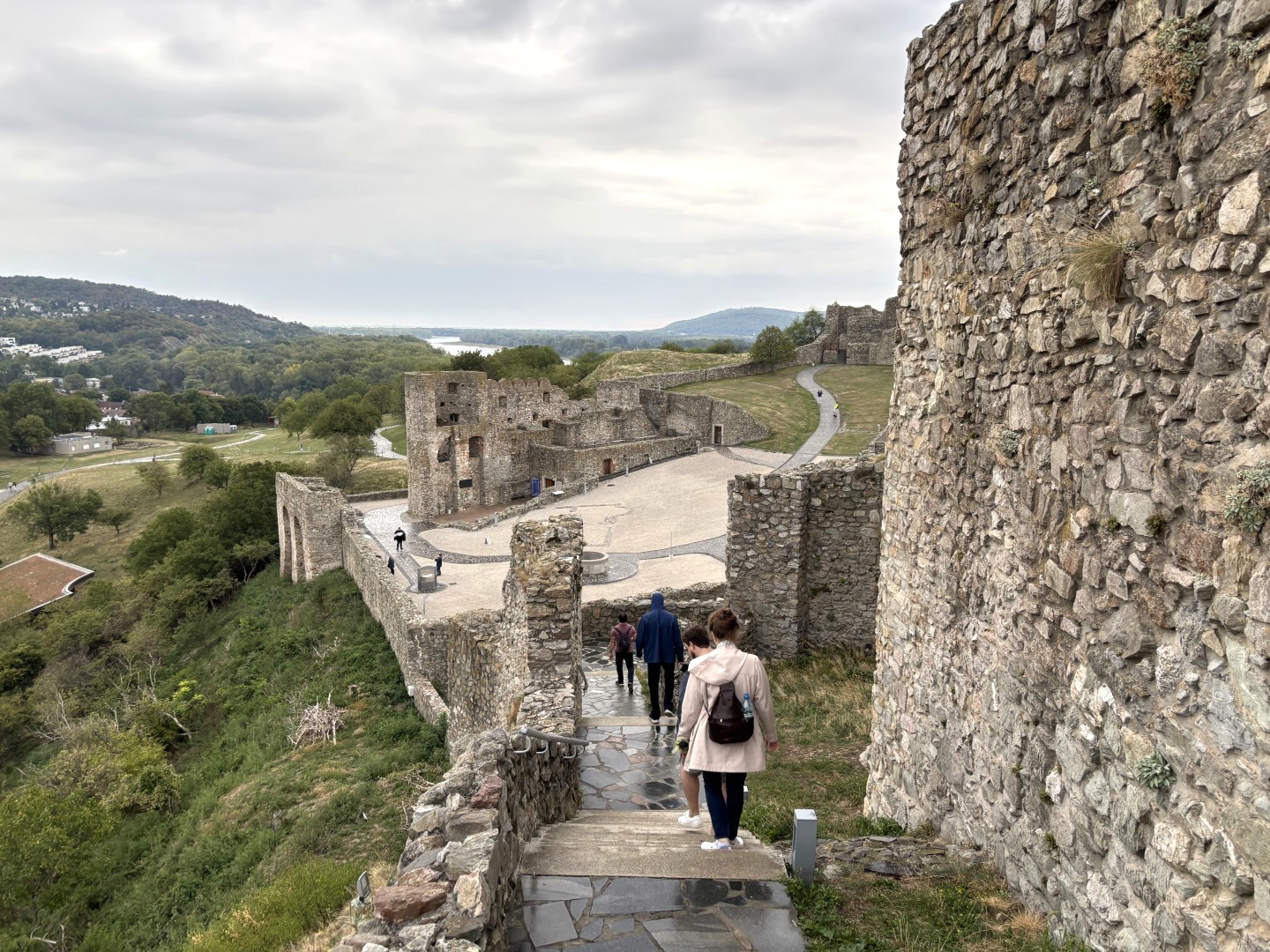
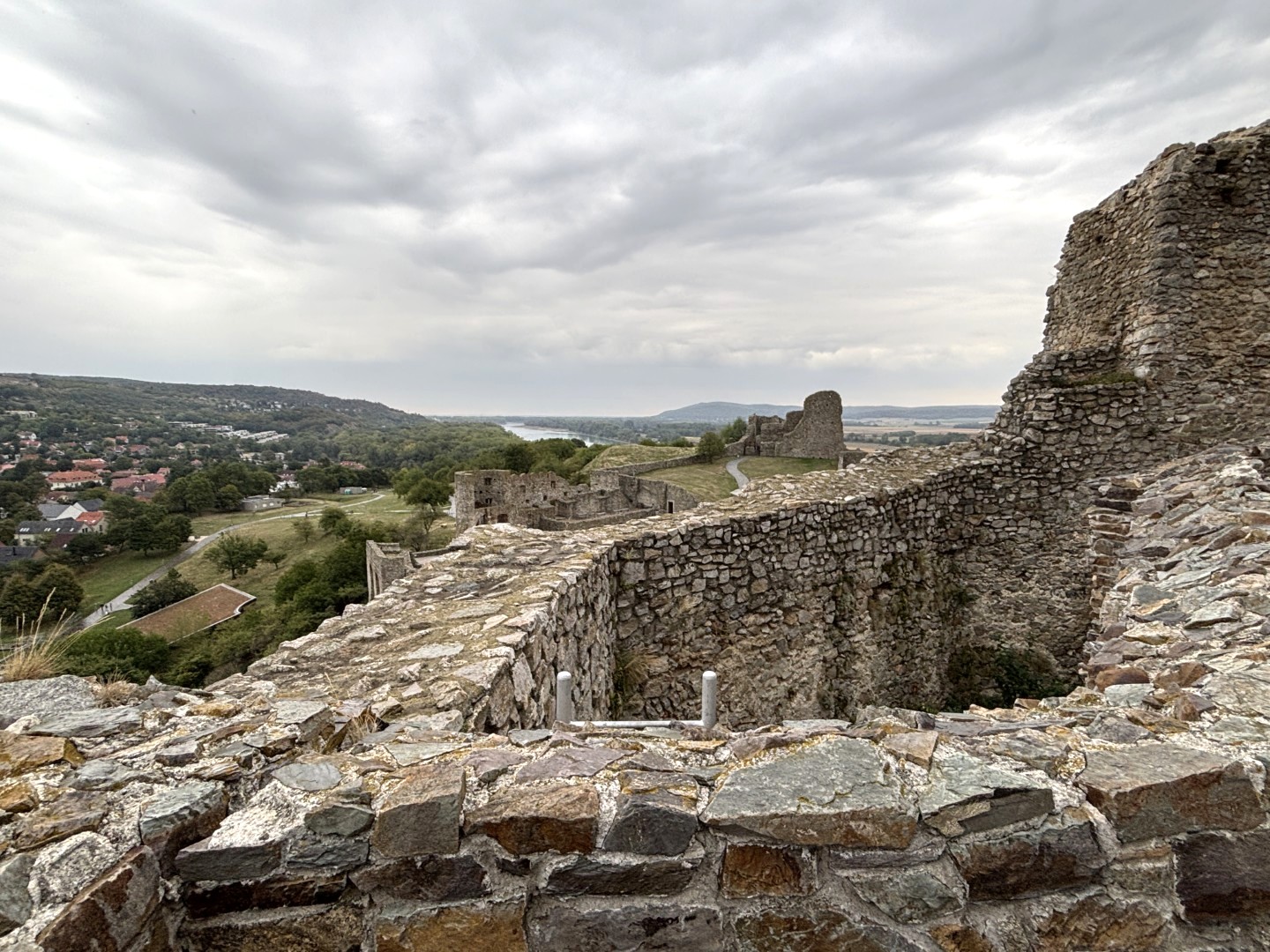
Hier stond oorspronkelijk niet alleen een verdedigingstoren, maar ook een bewoonde woontoren. Het was dus een combinatie van een verdedigingswerk en een adelijke residentie.
Originally there was not only a defense tower here, but also an inhabited residential tower. It was therefore a combination of a defense fortification and a noble residence.
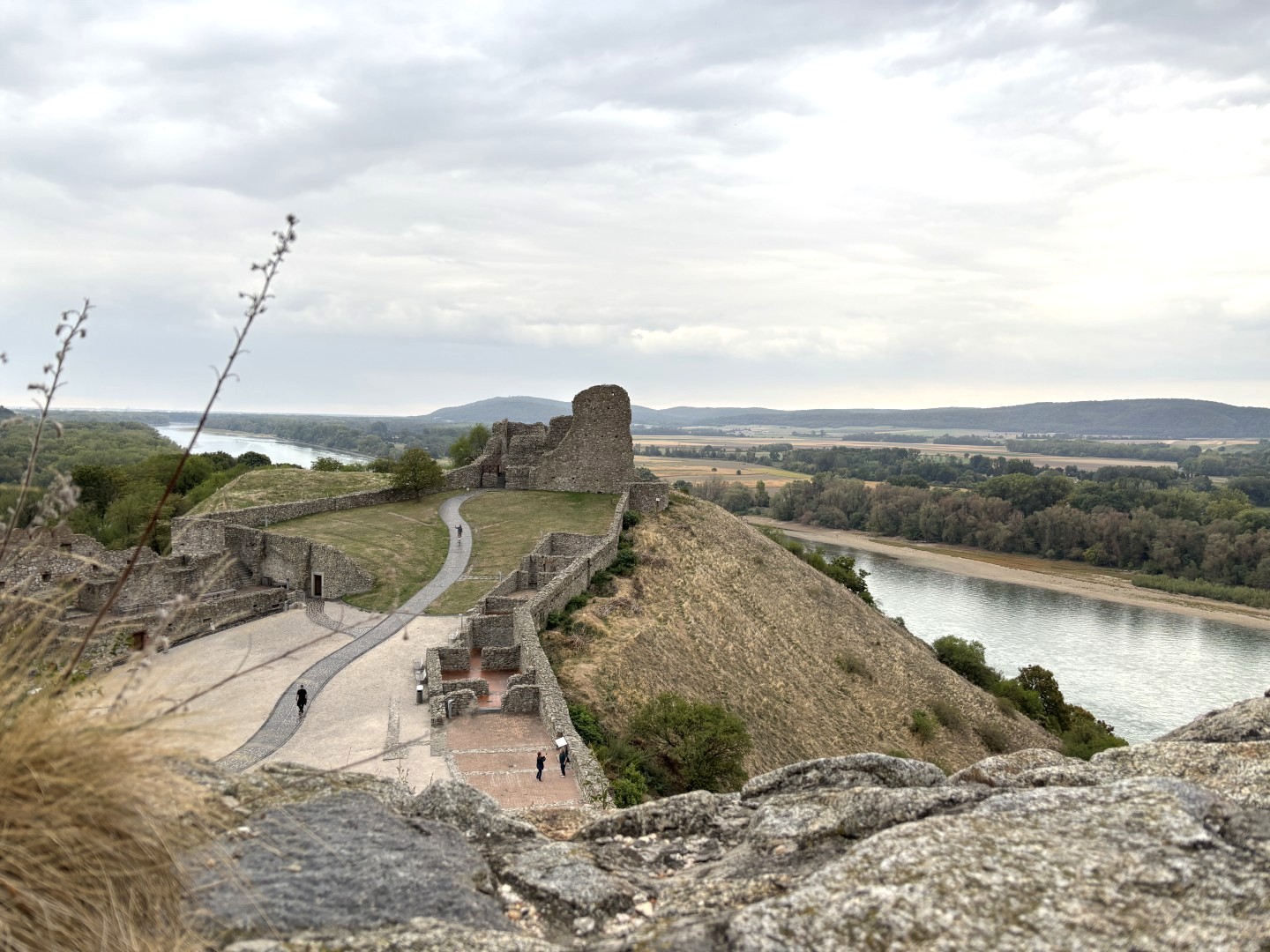
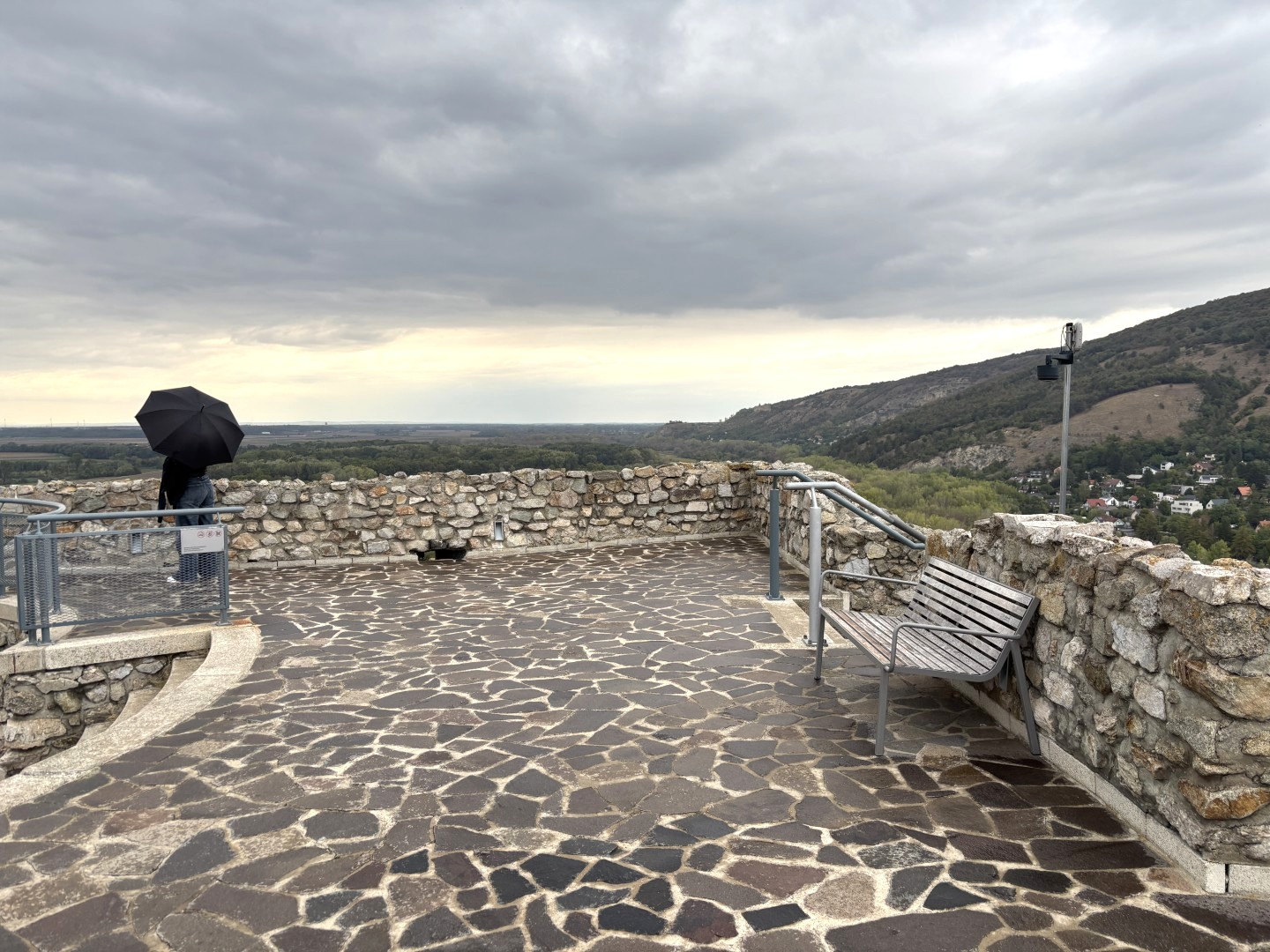
Het Upper Castle was vanaf 2008 niet meer toegankelijk voor bezoekers. Tussen 2014 en 2017 werd een omvangrijk restuaratie en toegankelijkheidsproject uitgevoerd. Op 5 mei 2017 werd het bovendste gedeelte opnieuw voor publiek geopend (zie film).
The Upper Castle was no longer accessible to visitors from 2008. Between 2014 and 2017, an extensive restoration and accessibility project was carried out. On May 5, 2017, the upper section was reopened to the public (see film).
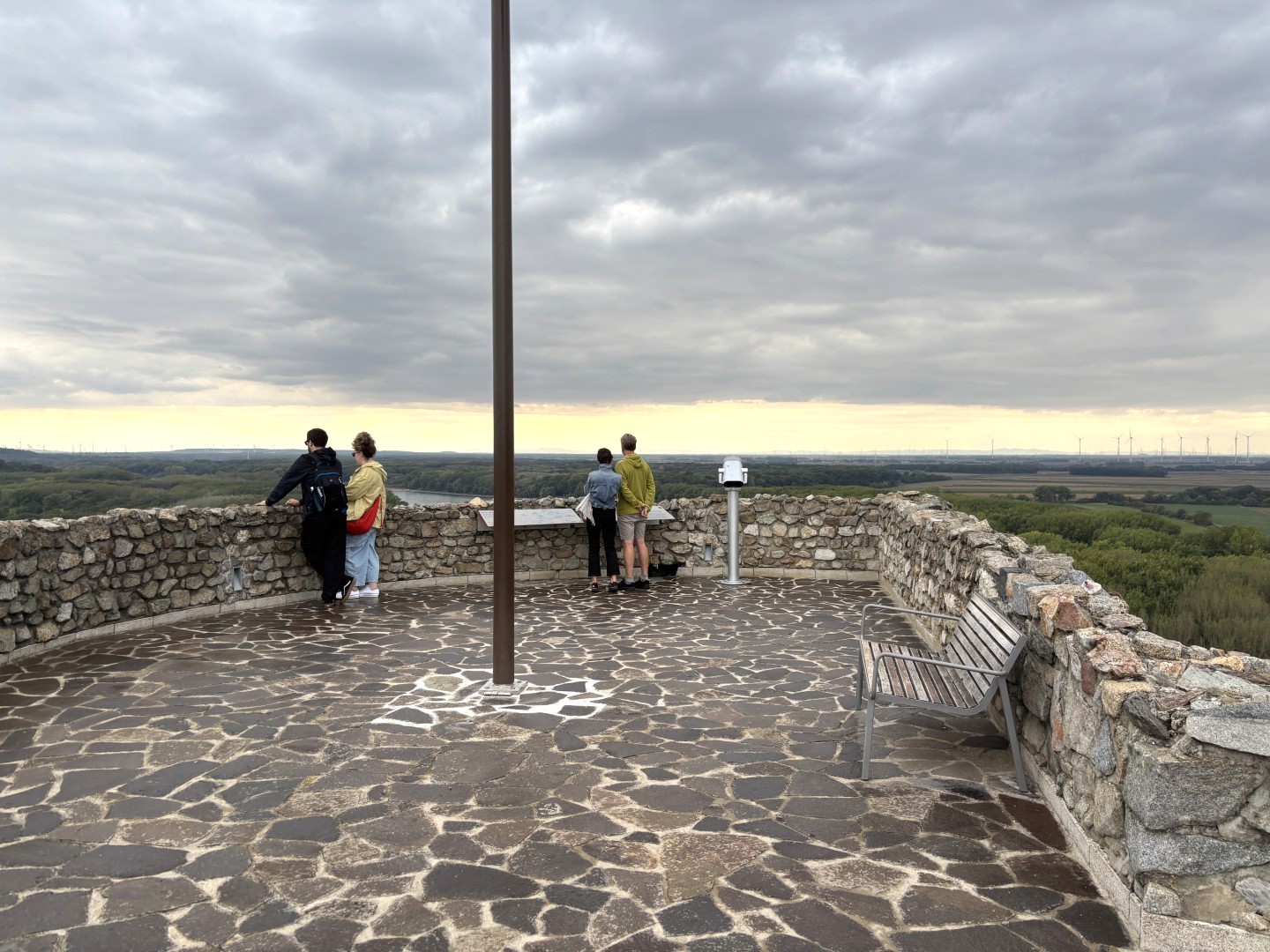
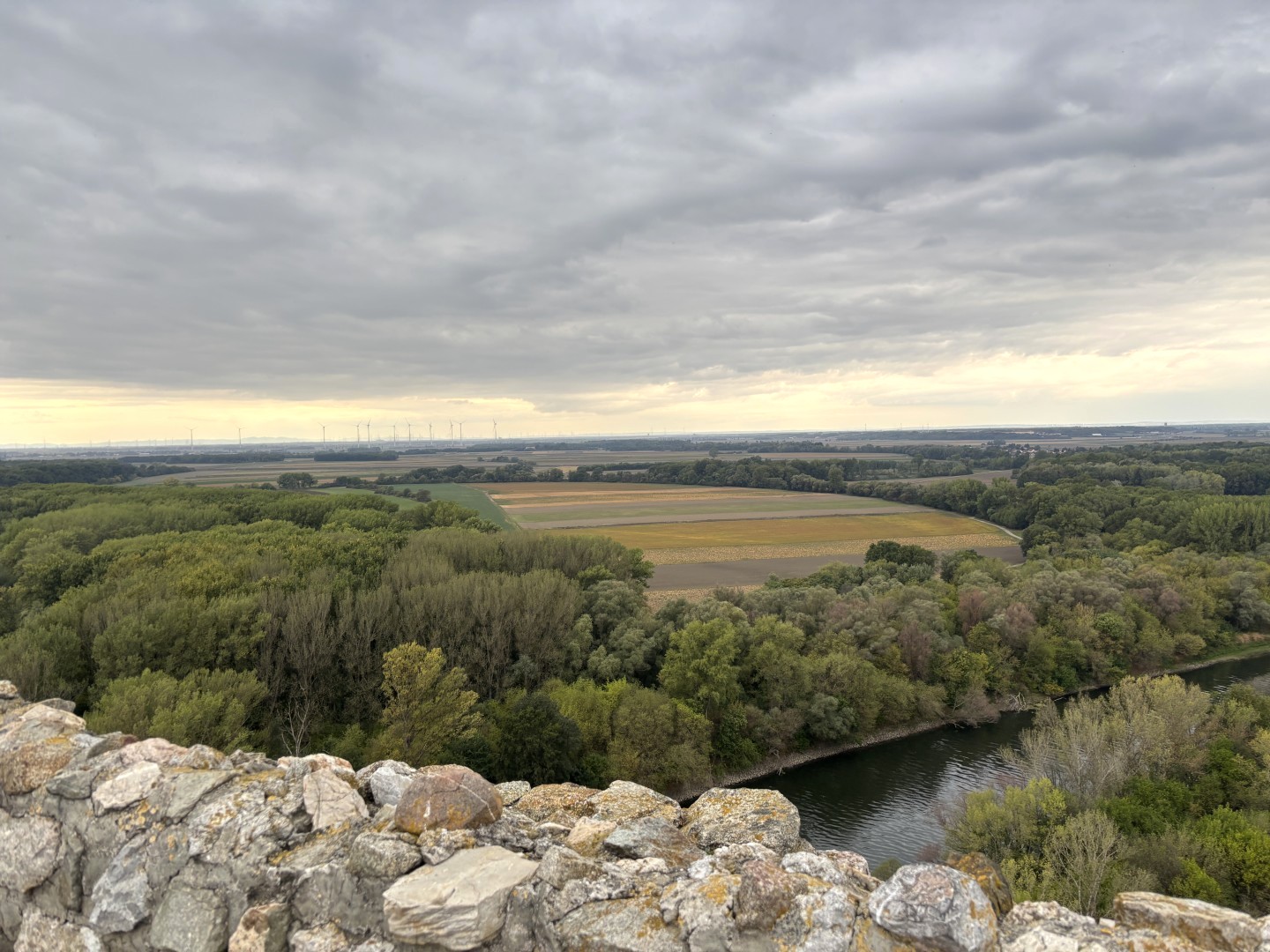
Vanaf het platform heb je een prachtig panorama over de rivieren, het lager gelegen kasteel, de Oostenrijkse heuvel Braunsberg en het landschap van Devinska Kobyla. Er staat ook een telescoop en een informatiekaart waarop je de herkenningspunten in het landschap kunt terugvinden.
From the platform, you have a magnificent panoramic view of the rivers, the castle situated below, the Austrian hill Braunsberg, and the landscape of Devínska Kobyla. There is also a telescope and an information board where you can identify various landmarks in the landscape.
@MK
